
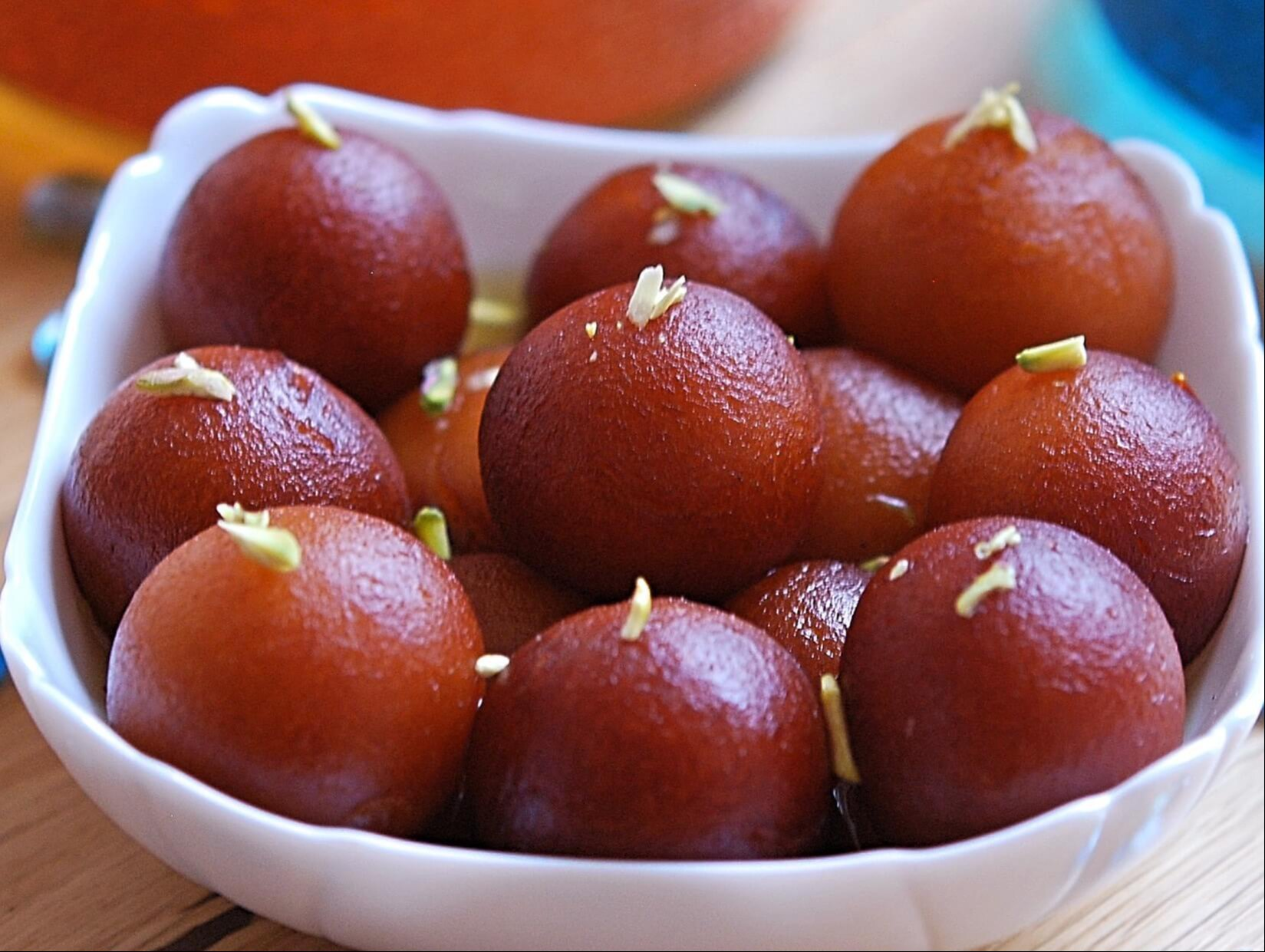
Gulab jamun is one of the most cherished desserts in Indian cuisine, known for its melt-in-the-mouth texture, rich flavor, and irresistible sweetness. Its history dates back several centuries and is deeply rooted in Mughlai culinary traditions. The name itself comes from Persian words: gulab (rose water) and jamun (a fruit native to India, similar in size and color to the dessert). Originally introduced to India by Persian invaders, gulab jamun was adapted in the royal Mughal kitchens using khoya (milk solids), ghee, and flavored sugar syrup. Over time, it became a centerpiece of celebratory feasts and festivals, symbolizing indulgence and joy.
During the Mughal era, gulab jamun was considered a luxurious treat reserved for banquets, weddings, and royal occasions. Slowly, it spread across different regions of India, each adding its own subtle twist. In the North, the use of khoya remained dominant, while in the East, variations with chhena (cottage cheese) were introduced. Over centuries, gulab jamun became a household favorite during festivals such as Diwali, Holi, and Eid. Its presence on the festive platter came to signify abundance and happiness, making it an inseparable part of Indian culinary identity.
As Indian communities migrated and spread across the world, gulab jamun became a global favorite. Today, it is one of the most ordered Indian desserts in restaurants worldwide—from New York to Dubai and London to Sydney. Its charm lies in the balance between simplicity and richness: soft golden-brown balls made from milk solids that are fried to perfection, then soaked in fragrant sugar syrup infused with rose water, saffron, or cardamom. Even in international culinary spaces, gulab jamun is celebrated as the ultimate Indian sweet.
More than just a dessert, gulab jamun holds a cultural and emotional value. For many, it is the sweet that marks special occasions, family gatherings, or the end of a wedding feast. Its syrupy richness connects generations and communities, reminding people of shared traditions. Whether served warm in winter or chilled in summer, gulab jamun continues to be the symbol of sweetness in Indian celebrations, cherished by young and old alike.
Gulab Jamun Ingredients (Serves 6–8)
For the Gulab Jamun
- Khoya (mawa, milk solids) – 1 cup (200 g)
- All-purpose flour (maida) – 2 tbsp
- Baking soda – a pinch
- Milk – 2–3 tbsp (as needed to make a soft dough)
- Ghee or oil – for deep frying
For the Sugar Syrup
- Sugar – 2 cups (400 g)
- Water – 2 cups (480 ml)
- Green cardamom – 4 pods, lightly crushed
- Rose water – 1 tsp
- Saffron strands – 6–8 (optional)
Steps
- In a large pan, add sugar and water. Heat until the sugar dissolves completely. Add cardamom pods, saffron (if using), and rose water. Simmer for 5 minutes, then set aside.
- In a mixing bowl, crumble khoya until smooth. Add flour and a pinch of baking soda. Mix well.
- Add milk gradually and knead into a soft, smooth dough. Do not over-knead, as this can make gulab jamuns hard.
- Divide the dough into equal portions and roll into smooth, crack-free balls. Cover with a damp cloth while shaping to avoid drying.
- Heat ghee or oil in a deep pan on low to medium flame. Test by dropping a small piece of dough—it should rise slowly without browning immediately.
- Gently slide in gulab jamun balls, frying on low flame. Stir occasionally to ensure even cooking and golden-brown color.
- Once fried, remove and drain excess oil. Immediately drop the hot gulab jamuns into warm sugar syrup.
- Let them soak for at least 2 hours so they absorb the syrup and become soft and juicy.
- Serve warm or chilled, garnished with chopped pistachios or almonds if desired.
Health Benefits
Although gulab jamun is an indulgent sweet, it contains elements of nutrition when enjoyed in moderation. Khoya provides calcium and protein, which are essential for bone health. Cardamom and saffron not only enhance flavor but also have antioxidant properties that support digestion and immunity. Replacing refined sugar with jaggery or using low-fat milk solids can make it a slightly healthier option without losing its charm.
Kitchen Tip: Always fry gulab jamuns on a low flame—this ensures they cook evenly inside and remain soft when soaked in syrup.