
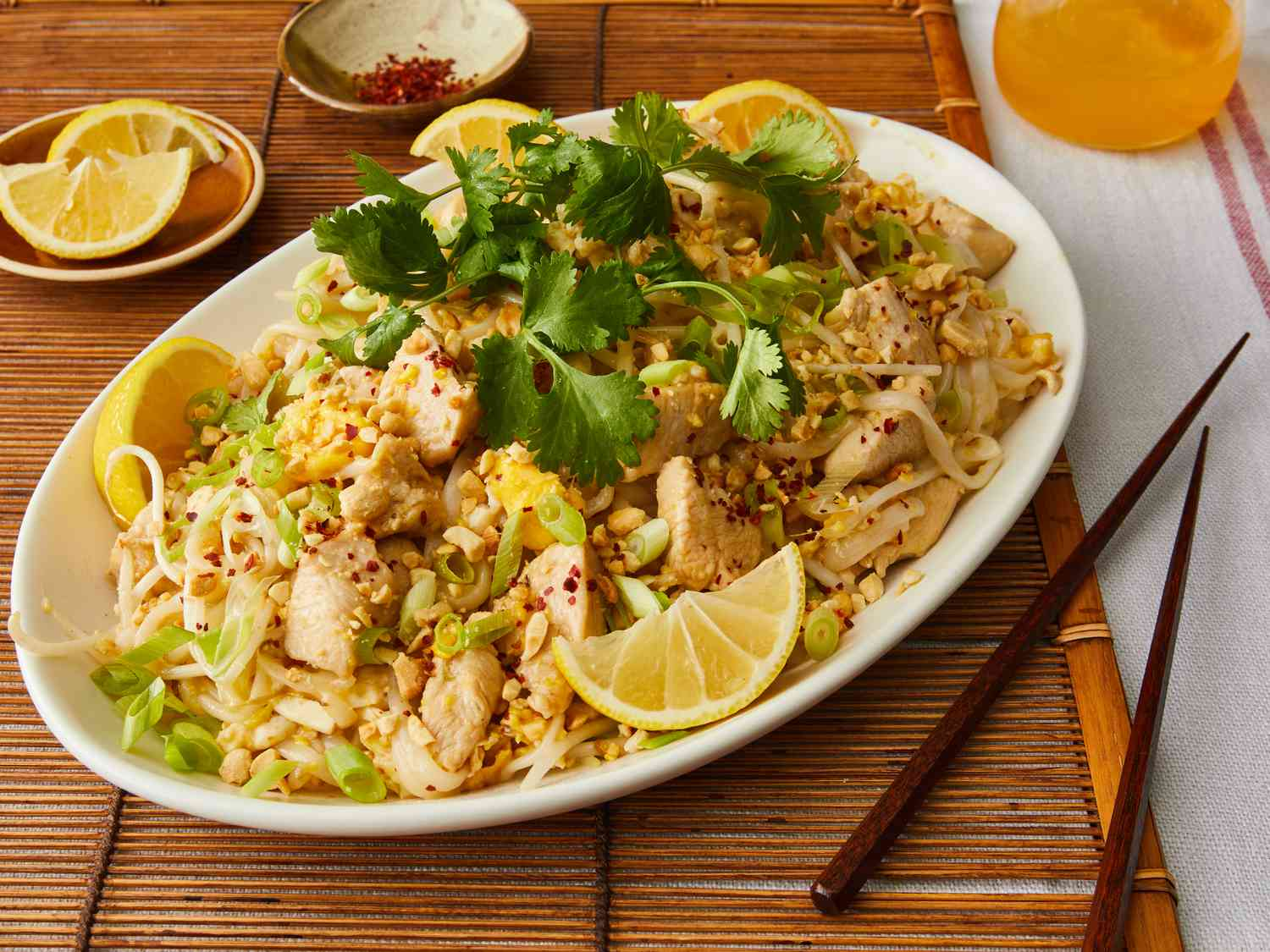
Pad Thai is one of the most famous dishes from Thailand, beloved worldwide for its perfect harmony of sweet, sour, salty, and umami flavors. Although today it is considered the national dish of Thailand, its history is relatively modern compared to other traditional Asian recipes. The dish gained prominence in the 1930s and 1940s during the tenure of Prime Minister Plaek Phibunsongkhram, who encouraged a national identity centered around Thai culture and cuisine.
To promote rice noodles and reduce the country’s dependence on rice grains during shortages, the government popularized a noodle-based stir-fry, which eventually evolved into Pad Thai. What began as a campaign to unify the country’s food culture soon became a culinary treasure.
Originally influenced by Chinese stir-fried noodle dishes, Pad Thai borrowed the technique of wok-frying but introduced Thai ingredients such as tamarind, fish sauce, and palm sugar, which gave it its unique character. This blend of Chinese cooking methods and Thai flavors is what makes Pad Thai a truly hybrid creation. It quickly grew in popularity across Thailand, not only because it was delicious but also because it was affordable and easy to prepare. Street vendors began selling Pad Thai in abundance, serving it wrapped in banana leaves or on simple plates, making it a quick, satisfying, and nourishing meal for workers and students alike.
In the second half of the 20th century, as tourism in Thailand expanded, Pad Thai gained international recognition. Travelers fell in love with its vibrant flavors and balance of textures, carrying their fondness for the dish back to their own countries. By the late 20th century, Pad Thai had cemented its place as one of the most popular dishes served in Thai restaurants abroad. Today, it’s a global favorite, served both in its authentic form and in variations that adapt to local tastes, such as vegetarian or vegan versions that substitute tofu for shrimp or chicken.
What makes Pad Thai so enduringly popular is its versatility and balance. The dish typically features stir-fried rice noodles tossed with eggs, tofu, shrimp, or chicken, all flavored with a tamarind-based sauce that balances sweetness, tanginess, and umami. Fresh bean sprouts, crushed peanuts, and lime wedges complete the dish, adding crunch and zest. The result is a dish that satisfies every taste bud in one bite. Whether enjoyed from a bustling Bangkok street vendor or cooked at home, Pad Thai remains an ambassador of Thai cuisine, representing both tradition and adaptability.
Ingredients
For the Sauce
- Tamarind paste – 3 tbsp
- Fish sauce – 3 tbsp
- Palm sugar (or brown sugar) – 2 tbsp
- Soy sauce – 1 tbsp
- Chili flakes – 1 tsp (adjust to taste)
For the Noodles
- Rice noodles (medium flat) – 200 g
- Water – enough for soaking noodles
For the Stir-Fry
- Vegetable oil – 3 tbsp
- Garlic – 3 cloves, finely chopped
- Egg – 2, lightly beaten
- Firm tofu – 100 g, cut into small cubes
- Shrimp – 150 g, peeled and deveined (or chicken if preferred)
- Bean sprouts – 1 ½ cups
- Spring onions – 3, chopped into 2-inch pieces
For Garnish
- Roasted peanuts – ¼ cup, crushed
- Fresh lime – 2, cut into wedges
- Fresh coriander – handful, chopped
Steps
- Soak rice noodles in warm water for 30 minutes until soft but not mushy, then drain.
- In a small bowl, mix tamarind paste, fish sauce, soy sauce, palm sugar, and chili flakes to make the sauce. Adjust sweetness or tanginess as preferred.
- Heat oil in a wok or large pan over medium heat. Add garlic and sauté until fragrant.
- Add tofu and shrimp (or chicken) and stir-fry until golden and cooked through.
- Push ingredients to one side of the wok, then pour in the beaten eggs. Scramble lightly until just set.
- Add drained rice noodles to the wok, followed by the prepared sauce. Toss everything together until noodles are evenly coated and glossy.
- Add bean sprouts and spring onions. Stir-fry quickly for 1–2 minutes to keep them crisp.
- Transfer Pad Thai to serving plates. Top with crushed peanuts, a sprinkle of coriander, and lime wedges on the side.
Health Benefits
Pad Thai, when prepared with fresh and wholesome ingredients, can be a balanced and nourishing meal. Rice noodles provide a gluten-free carbohydrate source for energy, while shrimp, chicken, or tofu offer lean protein. Eggs add additional protein and nutrients such as vitamin B12 and choline, supporting brain function. The use of bean sprouts and spring onions boosts the dish with fiber, vitamins A and C, and antioxidants. Peanuts contribute healthy fats and protein, while tamarind provides digestive benefits. When cooked with less oil and balanced portions, Pad Thai can be both satisfying and relatively healthy.
Kitchen Tip: To achieve the authentic smoky flavor known as “wok hei,” cook Pad Thai quickly over high heat and avoid overcrowding the pan.