
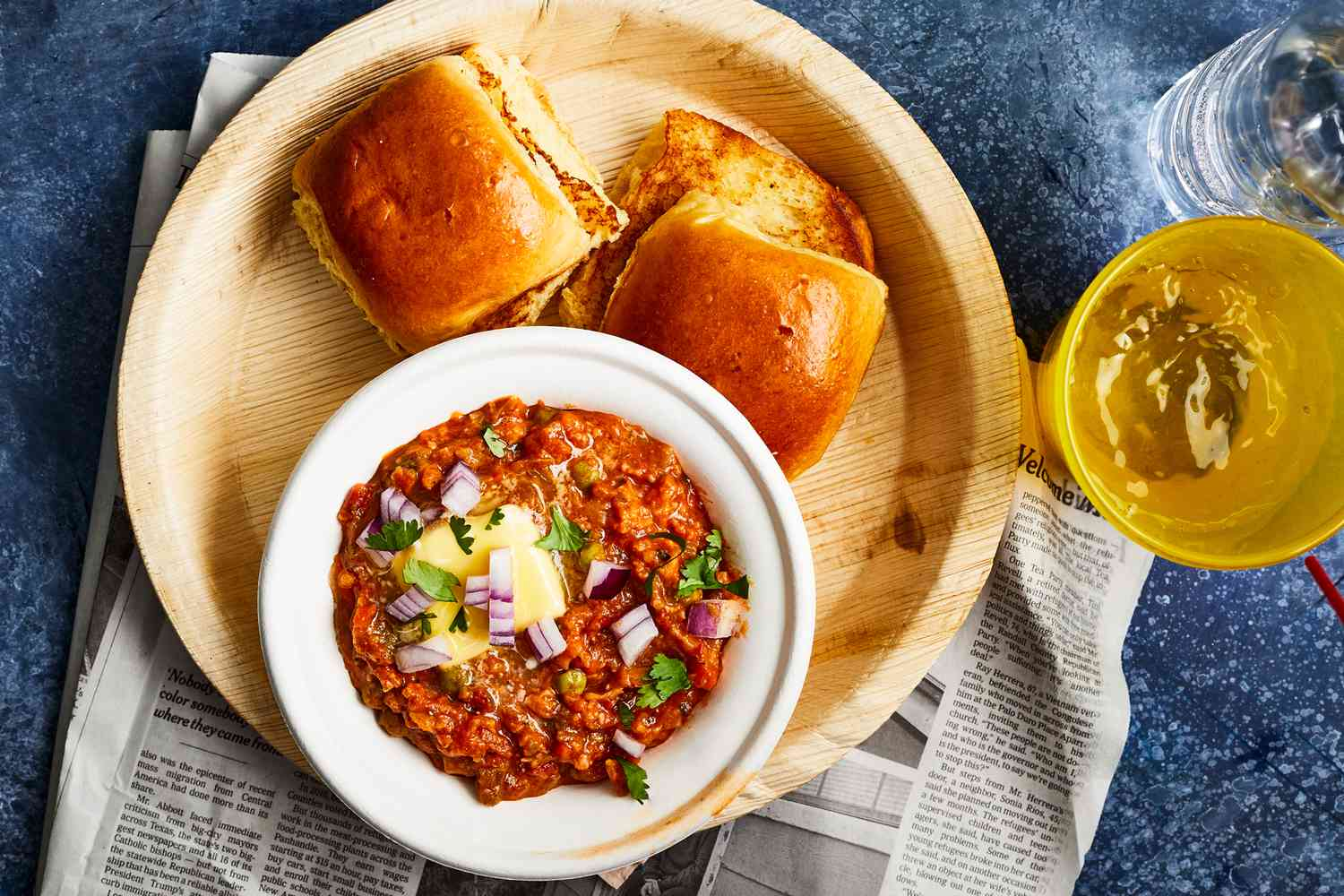
Pav Bhaji is one of the most iconic street foods of India, loved across the nation for its irresistible taste and comforting flavors. Its origins trace back to Mumbai in the 1850s, during the textile mill era. The dish was created as a quick, affordable, and filling meal for mill workers who worked long hours and needed something hearty at the end of the day. Vendors mixed leftover vegetables with spices, mashed them together, and served the bhaji with pav (soft bread rolls) lightly toasted in butter. What started as a humble worker’s meal soon gained immense popularity, spreading across Mumbai’s streets and eventually throughout India.
Over time, Pav Bhaji transformed into a cultural and culinary sensation. No trip to Mumbai is complete without tasting the famous Juhu Beach pav bhaji, where the sizzling sound of butter hitting the hot tawa and the aroma of spiced vegetables fills the air. From roadside carts to fine dining restaurants, pav bhaji has become a staple that appeals to all generations. Its adaptability and rich taste helped it spread beyond India as well, making its way into Indian restaurants worldwide, where it continues to win hearts with every bite.
The beauty of pav bhaji lies in its balance of flavors and textures. The bhaji is a spicy, buttery vegetable mash made with potatoes, peas, tomatoes, capsicum, and onions, flavored with a unique spice blend called pav bhaji masala. The pav, on the other hand, is a soft bread roll toasted with butter until golden brown and crispy on the edges. When paired together, the combination creates an explosion of flavor—spicy, tangy, buttery, and utterly satisfying. The dish is often garnished with freshly chopped onions, coriander, and a squeeze of lemon, enhancing its taste even further.
Today, pav bhaji is not just a street food; it has made its way into parties, weddings, and even as a comfort meal at home. It’s versatile enough to be enjoyed as a main course, a quick evening snack, or even a special weekend treat with family. Modern variations such as cheese pav bhaji, paneer pav bhaji, and Jain pav bhaji show how adaptable the dish can be while still retaining its original charm. Whether you eat it at a roadside stall or prepare it in your kitchen, pav bhaji never fails to bring joy to the table.
Ingredients
- Pav (bread rolls) – 8 pieces
- Potatoes – 4 medium (boiled and mashed)
- Green peas – 1 cup (boiled)
- Tomatoes – 4 large (finely chopped)
- Onions – 3 medium (2 finely chopped, 1 sliced for garnish)
- Capsicum – 1 large (finely chopped)
- Ginger-garlic paste – 2 tbsp
- Pav bhaji masala – 3 tbsp
- Red chili powder – 1 ½ tsp
- Turmeric powder – ½ tsp
- Salt – to taste
- Butter – 6 tbsp (plus extra for toasting pav)
- Oil – 2 tbsp
- Lemon – 1 (cut into wedges)
- Fresh coriander leaves – 2 tbsp (chopped)
Steps
- Heat oil and 2 tbsp butter in a large flat pan or tawa over medium heat.
- Add chopped onions and sauté until they turn golden brown.
- Stir in the ginger-garlic paste and cook for a minute until fragrant.
- Add chopped capsicum and tomatoes, cooking until the tomatoes soften and release their juices.
- Mix in turmeric, chili powder, pav bhaji masala, and salt. Cook the masala until it blends well with the vegetables.
- Add boiled potatoes and peas, mash everything together using a potato masher directly on the pan.
- Keep mashing and mixing while adding a little water as needed to get a thick but smooth consistency.
- Add 2 tbsp more butter and let the bhaji simmer for 5–7 minutes, stirring occasionally.
- Meanwhile, slice pav buns horizontally, apply butter generously, and toast them on the pan until golden brown.
- Serve the hot, spicy bhaji with buttered pav, topped with chopped onions, coriander, and a squeeze of lemon juice.
Health Benefits
Though pav bhaji is considered indulgent street food, it offers several nutritional benefits when made at home with fresh ingredients. The bhaji is loaded with vegetables like potatoes, peas, tomatoes, and capsicum, which provide vitamins, minerals, and fiber. Adding less butter and using whole wheat pav can make the dish healthier without compromising on taste. Peas are a great source of plant-based protein, while tomatoes are rich in antioxidants like lycopene. Coriander and lemon not only enhance flavor but also add a boost of vitamin C, aiding digestion and immunity. Enjoyed in moderation, pav bhaji is both satisfying and nourishing.
Kitchen Tip: To make your pav bhaji extra flavorful, roast the pav bhaji masala for a minute before adding it to the vegetables—this enhances its aroma and depth of taste.