
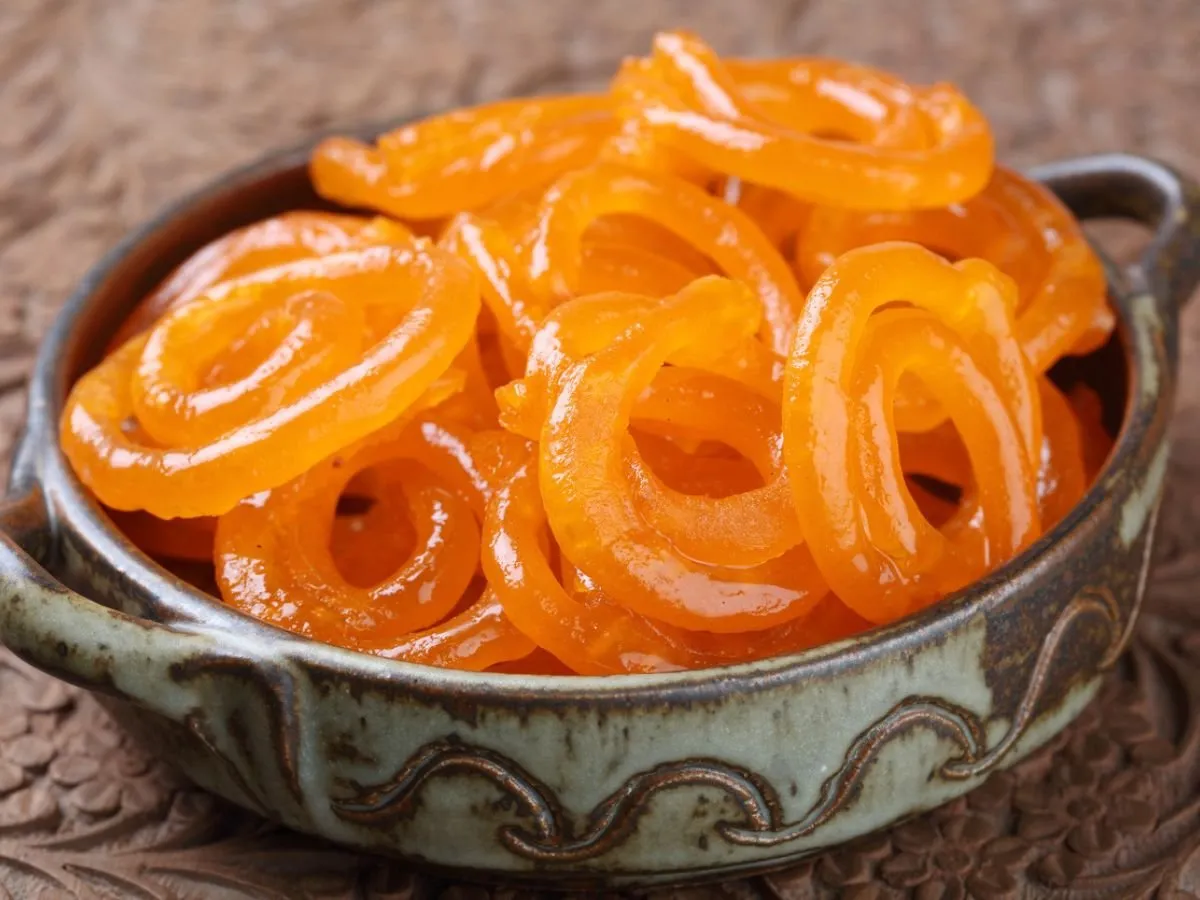
Jalebi is one of the most beloved sweets in India, known for its irresistible spiral shape, crunchy texture, and syrupy sweetness. Its history dates back several centuries, and it is believed to have originated in the Middle East, where it was known as Zolabiya or Zalabiya. Traders and travelers brought it to the Indian subcontinent, where it quickly became popular and adapted to local tastes. Over time, jalebi established itself as a festive treat, often prepared during special occasions, weddings, and religious celebrations. Its vibrant golden color and delightful sweetness make it a dessert that instantly lifts the mood.
In India, jalebi has become deeply intertwined with culture and tradition. It is especially popular during festivals like Diwali, Holi, and Ramadan, where families and sweet shops prepare it in large batches to share with loved ones. In northern India, jalebi is often enjoyed with a glass of hot milk or rabri, while in Gujarat and Madhya Pradesh, it is paired with the savory fafda for a unique festive combination. Across the country, it is commonly found in sweet shops and street stalls, where jalebi is fried fresh in ghee or oil and dipped in warm sugar syrup right before serving.
The charm of jalebi lies in its perfect balance of texture and flavor. The batter, made from flour and yogurt, is fermented overnight to achieve its tangy taste and spongy consistency. Once piped into hot oil in circular patterns, the batter transforms into crispy golden spirals. These are then soaked in saffron-infused sugar syrup, which seeps into the airy texture, giving jalebi its signature juiciness and sweetness. The result is a dessert that is crunchy on the outside, syrupy on the inside, and utterly satisfying with every bite.
Today, jalebi is not only enjoyed in India but also across South Asia and the Middle East, with variations like Imarti in India, Zulbia in Iran, and Mushabak in Arab countries. Its universal appeal lies in its ability to bring festive cheer and sweet indulgence to any occasion. Whether eaten as a morning snack, a festival sweet, or a midnight craving, jalebi continues to be a timeless delight that connects generations through its taste and tradition.
Ingredients
- All-purpose flour (maida) – 1 cup
- Cornflour – 2 tbsp
- Yogurt – ½ cup
- Baking powder – ½ tsp
- Warm water – as needed for batter
- Ghee or oil – for frying
For Sugar Syrup:
- Sugar – 1 ½ cups
- Water – ¾ cup
- Saffron strands – a pinch (optional)
- Cardamom powder – ½ tsp
- Rose water – ½ tsp
Steps
- In a mixing bowl, combine all-purpose flour, cornflour, baking powder, and yogurt.
- Add warm water gradually and whisk to form a smooth, thick batter. The consistency should be similar to pancake batter.
- Cover the bowl and allow the batter to ferment for at least 8–10 hours or overnight.
- To prepare the sugar syrup, heat sugar and water in a pan until it reaches a one-string consistency. Add saffron, cardamom, and rose water for flavor. Keep warm.
- Heat ghee or oil in a wide pan over medium flame. Fill a piping bag or squeeze bottle with the fermented batter.
- Pipe the batter into the hot oil in circular spiral shapes, frying until crisp and golden on both sides.
- Remove fried jalebis and immediately dip them into the warm sugar syrup for 30–40 seconds, ensuring they soak evenly.
- Take them out and place on a plate. Serve hot and fresh for the best taste.
Health Benefits
While jalebi is a sweet indulgence, it does offer certain benefits when enjoyed in moderation. The fermentation of the batter enhances digestion by promoting beneficial bacteria, and saffron and cardamom used in the syrup are known for their antioxidant and mood-boosting properties. Jalebi also provides a quick energy boost due to its high carbohydrate content, making it a festive treat that fuels the body. However, since it is deep-fried and sugar-rich, it should be eaten mindfully as part of a balanced diet.
Kitchen Tip: For perfectly crispy jalebis, always fry them on medium heat—too high will burn them, and too low will make them soggy.