
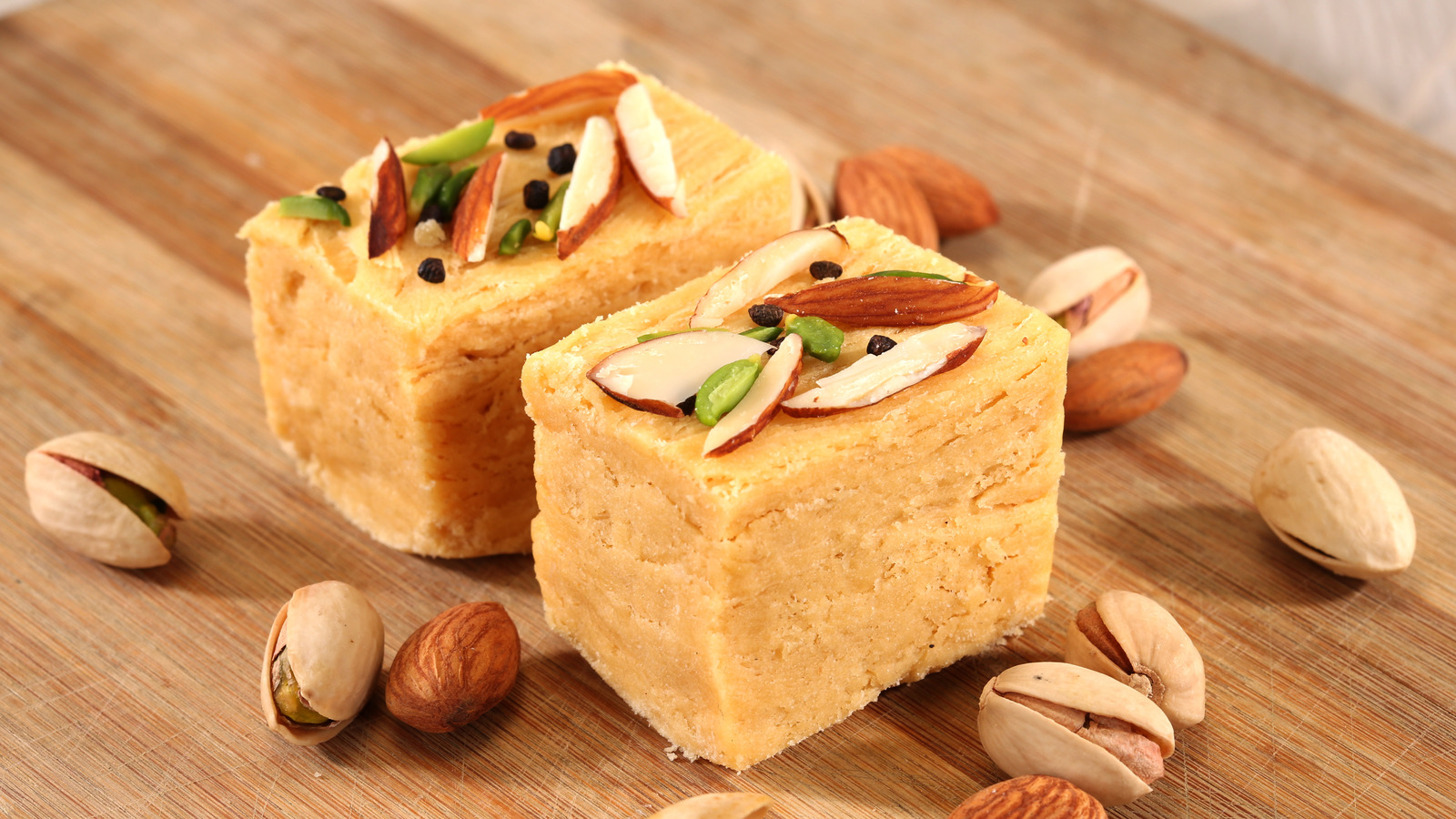
Soan Papdi, also known as Patisa, is one of the most iconic Indian sweets loved for its light, flaky texture and melt-in-the-mouth sweetness. This delightful dessert has its origins in the northern regions of India, particularly Uttar Pradesh and Rajasthan, and has now become a favorite across the country. Traditionally enjoyed during festivals like Diwali and Holi, Soan Papdi is also a popular gift sweet, symbolizing joy, togetherness, and celebration. Its unique layered structure and delicate crunch set it apart from other Indian mithais, making it a timeless treat.
Historically, Soan Papdi was introduced as a modern take on older traditional sweets, using gram flour, sugar, and ghee as its main ingredients. Over time, it evolved to include refined flour and cardamom, giving it the distinctive lightness and aromatic flavor it is known for today. The skillful preparation of Soan Papdi is what makes it special—it involves cooking the sugar syrup to the right consistency and stretching the dough to create fine layers, resulting in that characteristic flaky texture.
What makes Soan Papdi a household favorite is its balance of sweetness and crispiness, combined with a subtle hint of cardamom and the richness of ghee. It’s one of those sweets that people associate with nostalgia and festive vibes. Whether bought from a sweet shop or prepared at home, it brings joy to every occasion. With its long shelf life compared to many other Indian sweets, Soan Papdi is also an ideal choice for gifting during celebrations.
Today, Soan Papdi comes in multiple flavors like chocolate, mango, and pistachio to cater to modern tastes, yet the classic version remains unbeatable. The beauty of this sweet lies in its simplicity—basic ingredients, but a unique preparation technique that results in an indulgent treat. Learning to make Soan Papdi at home gives you control over the quality of ingredients and ensures a fresher, healthier version of this festive favorite.
Soan Papdi Ingredients
Serves: 8–10 pieces
- Gram flour (besan) – 1 cup
- Refined flour (maida) – ½ cup
- Ghee – ½ cup
- Sugar – 1 ½ cups
- Water – ½ cup
- Cardamom powder – ½ tsp
- Almonds – 2 tbsp (sliced)
- Pistachios – 2 tbsp (sliced)
Steps
- In a heavy-bottom pan, dry roast the gram flour and refined flour on low heat until aromatic. Set aside.
- In another large pan, heat the ghee until it melts completely. Add the roasted flours to the ghee and mix well to form a smooth, lump-free mixture. Keep this mixture warm.
- In a separate pan, combine sugar and water. Cook over medium heat to prepare a sugar syrup of two-thread consistency (this is crucial for achieving the flaky texture).
- Once the syrup reaches the correct consistency, pour it gradually into the warm flour-ghee mixture, stirring constantly to blend everything together.
- Remove the mixture from heat and allow it to cool slightly. When it is warm enough to handle, start pulling and stretching the mixture repeatedly to create layers.
- Flatten the mixture into a greased plate or tray, pressing it evenly to form a smooth surface.
- Sprinkle cardamom powder, sliced almonds, and pistachios on top, pressing them gently into the mixture.
- Let it cool completely, then cut into square or rectangular pieces. Store in an airtight container.
Health Benefits
Soan Papdi is an indulgent sweet best enjoyed in moderation. The gram flour adds a dose of protein, while ghee provides healthy fats that support energy levels. Nuts like almonds and pistachios contribute vitamins, minerals, and antioxidants, making this dessert slightly more nutritious than some other refined sweets. However, due to its high sugar and fat content, it should be treated as an occasional festive delight.
Kitchen Tip: Ensure the sugar syrup reaches the exact two-thread consistency, as this is key to achieving Soan Papdi’s signature flaky texture.