
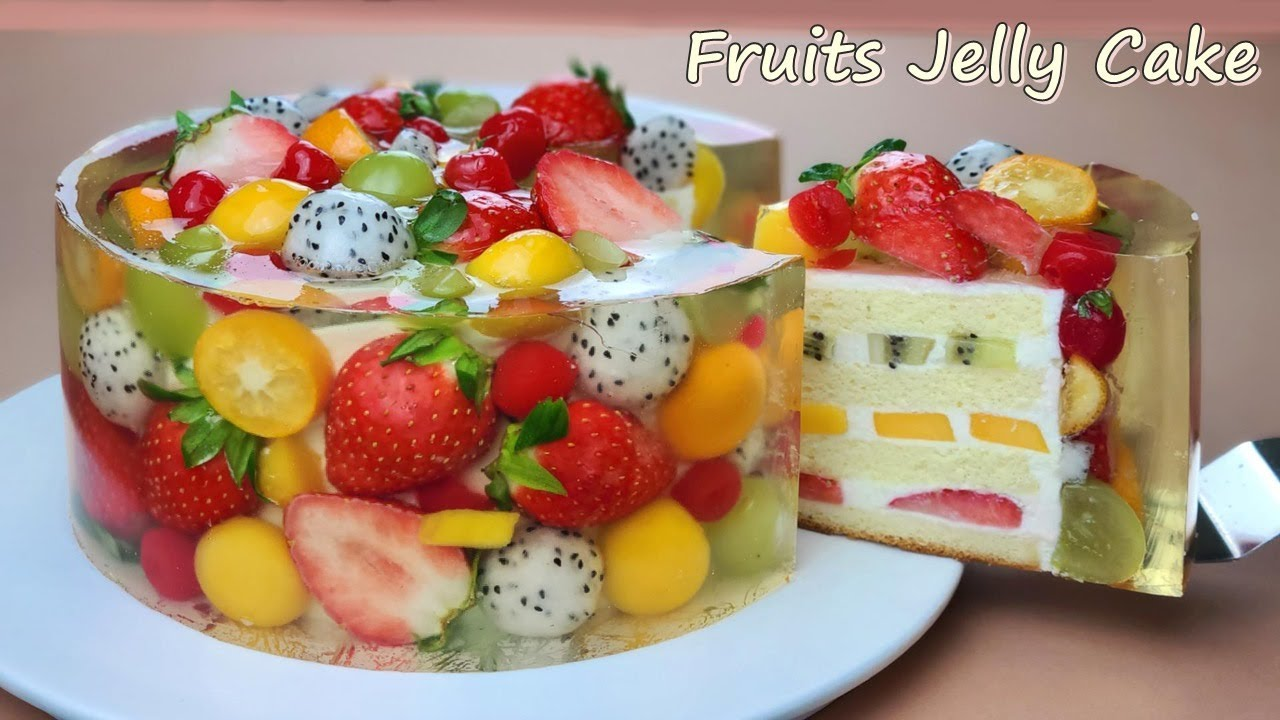
Jelly cake is one of the most eye-catching and playful desserts that has earned its place in celebrations across the world. With its bright colors, glossy texture, and wobbly charm, it instantly brings joy to both children and adults. The roots of jelly-based desserts can be traced back to centuries ago, when natural gelatin was extracted and used in royal feasts. Over time, commercial gelatin and flavoring agents made jelly more accessible, turning it into a dessert for everyone.
Jelly cakes became especially popular in the 20th century, often served at birthday parties, family gatherings, and festive events. Their unique appeal lies in how simple ingredients can transform into a vibrant, multi-layered delicacy that looks as beautiful as it tastes. The charm of jelly cake lies not only in its visual appeal but also in its versatility. It can be prepared in countless variations—single flavor, layered, or even marble-styled patterns.
Some versions incorporate fresh fruits like strawberries, grapes, or kiwi for added freshness, while others combine jelly with creamy custard or sponge cake for a rich, indulgent touch. In Asian countries, agar-agar jelly cakes are extremely popular, often made with coconut milk to enhance flavor and texture. Meanwhile, in Western countries, colorful gelatin-based jelly cakes remain a staple of birthday parties and summer celebrations. No matter the region, the jelly cake continues to be loved for its cheerful look and delightful taste.
One of the reasons jelly cake is so popular is its simplicity. Even beginners in the kitchen can prepare it with ease, and the result is always impressive. It requires no elaborate baking skills—just patience while the layers set to achieve that beautiful, multi-colored look. Beyond its simple preparation, jelly cake offers endless creativity. You can mix and match flavors, create themed colors for holidays or special occasions, or even mold it into fancy shapes for children’s parties. Its adaptability makes it a dessert that truly suits every occasion, from casual family evenings to grand festive feasts.
In today’s time, when healthy eating is becoming a priority, jelly cakes have also adapted. Low-sugar versions and fruit-based jellies have made their way into kitchens, giving people a chance to enjoy this dessert guilt-free. Agar-agar, which is derived from seaweed, is often used as a vegetarian substitute for gelatin, making jelly cakes accessible to people with different dietary preferences. Combined with fresh fruits, these cakes become not only visually delightful but also a light and refreshing dessert option. This balance of beauty, flavor, and adaptability is what keeps jelly cake timeless and cherished.
Ingredients
Serves: 6 people
- Flavored jelly crystals (strawberry, orange, pineapple, or any preferred flavors) – 3 packs (90 g each)
- Boiling water – 3 cups (1 cup per flavor)
- Cold water – 3 cups (1 cup per flavor)
- Fresh fruits (optional, such as kiwi, grapes, strawberries) – 1 cup, chopped
- Whipped cream – ½ cup (for garnish, optional)
- Mint leaves – a few (for garnish)
Steps
- Dissolve one packet of flavored jelly crystals in 1 cup of boiling water. Stir well until the crystals are completely dissolved.
- Add 1 cup of cold water to the mixture and stir again.
- Pour the jelly mixture into a mold or dish and refrigerate for 30–40 minutes until set but not too firm.
- Prepare the second flavor of jelly following the same steps and allow it to cool slightly before pouring it gently over the first layer. Refrigerate again until set.
- Repeat the process with the third flavor, layering it carefully over the previous ones. Ensure each layer is set before adding the next.
- If adding fruits, place them between layers or on the final layer before it fully sets.
- Once all layers are firm, gently unmold the jelly cake onto a serving plate.
- Garnish with whipped cream and fresh mint leaves for an elegant finish.
- Slice and serve chilled.
Health Benefits
Jelly cake, when made with the right ingredients, can be a light and refreshing dessert option. Gelatin-based jelly supports gut health and digestion, while agar-agar provides dietary fiber and is completely plant-based. Adding fruits to the jelly cake boosts its nutritional value by providing vitamins, minerals, and antioxidants. Opting for low-sugar jelly crystals or naturally sweetened options makes it a healthier treat for both children and adults. Since it is light on the stomach and hydrating, jelly cake can be enjoyed guilt-free, especially in warmer months when refreshing desserts are most welcome.
Kitchen Tip: For a more festive touch, try making your jelly cake in silicone molds with fun shapes, or layer it with sponge cake for added richness.