
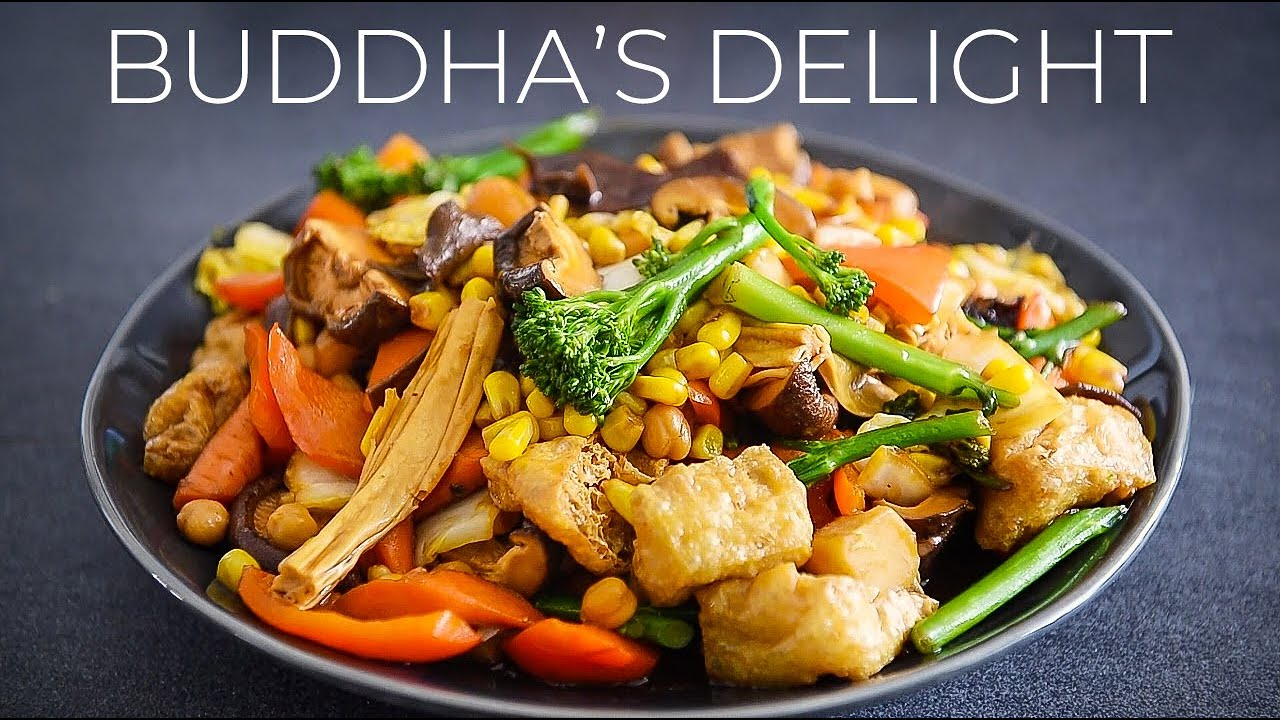
Buddha’s Delight, also known as Luo Han Zhai, is a traditional Chinese vegetarian dish that has been cherished for centuries, especially during festive occasions like the Lunar New Year. This dish carries both cultural significance and culinary charm. It is deeply rooted in Buddhist traditions, where monks and followers embrace vegetarianism as a practice of compassion and mindfulness. Over time, it has become a beloved household recipe, appreciated not only for its spiritual meaning but also for its delightful flavors and nourishing qualities.
The dish is named “Buddha’s Delight” because it is said to be a meal that Buddha himself would enjoy—light, meatless, and full of natural goodness. It typically features a wide array of vegetables, tofu, and sometimes noodles, all simmered in a savory broth infused with soy sauce, ginger, garlic, and sesame oil. The medley of ingredients makes it vibrant in color, rich in texture, and satisfying in taste. Its balance of flavors—earthy mushrooms, crunchy bamboo shoots, sweet carrots, and silky tofu—creates a harmony that represents the principles of Chinese cooking and Buddhist philosophy.
One of the most distinctive aspects of Buddha’s Delight is the symbolic value of its ingredients. For instance, shiitake mushrooms are considered to bring longevity, carrots symbolize good fortune, and bean sprouts signify growth and renewal. Because of these meanings, families often prepare this dish as part of their Lunar New Year celebrations to welcome prosperity and health. However, beyond symbolism, it is also a practical recipe—nutritious, easy to prepare, and adaptable to seasonal vegetables.
Over time, Buddha’s Delight has gained global popularity, especially among those who prefer plant-based meals. Modern variations often include glass noodles or cashews, adding more texture and nutrition. Despite its evolution, the dish has always remained true to its essence: a comforting, healthy, and flavorful vegetarian creation that nourishes both the body and the soul.
Luo Han Zhai Ingredients
Serves: 4 people
- Firm tofu – 200 g (cubed and lightly pan-fried)
- Shiitake mushrooms – 6–8 (soaked if dried, sliced if fresh)
- Carrots – 2 (thinly sliced)
- Baby corn – 8 pieces (cut in half)
- Bok choy – 2 cups (chopped)
- Bean sprouts – 1 cup
- Bamboo shoots – ½ cup (sliced)
- Snow peas – 1 cup
- Garlic – 4 cloves (minced)
- Ginger – 1-inch piece (minced)
- Soy sauce – 3 tbsp
- Vegetarian oyster sauce (mushroom-based) – 2 tbsp
- Sesame oil – 1 tbsp
- Cornstarch – 1 tsp (mixed with 2 tbsp water)
- Vegetable broth – 2 cups
- Salt – ½ tsp
- Black pepper – ½ tsp
- Oil – 2 tbsp for cooking
Steps
- Prepare and chop all vegetables, tofu, and mushrooms into bite-sized pieces.
- Heat oil in a wok or large pan and lightly fry the cubed tofu until golden. Remove and set aside.
- In the same pan, sauté garlic and ginger until aromatic.
- Add carrots, baby corn, bamboo shoots, and mushrooms. Stir-fry for 3–4 minutes.
- Pour in the vegetable broth, soy sauce, and vegetarian oyster sauce. Mix well.
- Add bok choy, snow peas, and bean sprouts. Cook for another 2–3 minutes, ensuring vegetables remain crisp and colorful.
- Return the tofu to the pan and drizzle with sesame oil. Stir gently to combine.
- Add the cornstarch slurry to thicken the sauce slightly. Cook for 1–2 more minutes.
- Serve hot with steamed rice or noodles for a wholesome meal.
Health Benefits
Buddha’s Delight is a powerhouse of nutrients thanks to its wide variety of vegetables. It is naturally low in fat, high in dietary fiber, and packed with vitamins and minerals. Mushrooms support immune health, tofu provides plant-based protein, and leafy greens like bok choy are rich in calcium and iron. This dish also promotes digestion due to the presence of fiber-rich bamboo shoots and bean sprouts. With no animal products, it is suitable for vegetarians and vegans, making it a versatile and nourishing dish for all.
Kitchen Tip: For added depth of flavor, soak dried shiitake mushrooms in warm water and use the soaking liquid as part of the broth—it enhances the umami taste of the dish.