
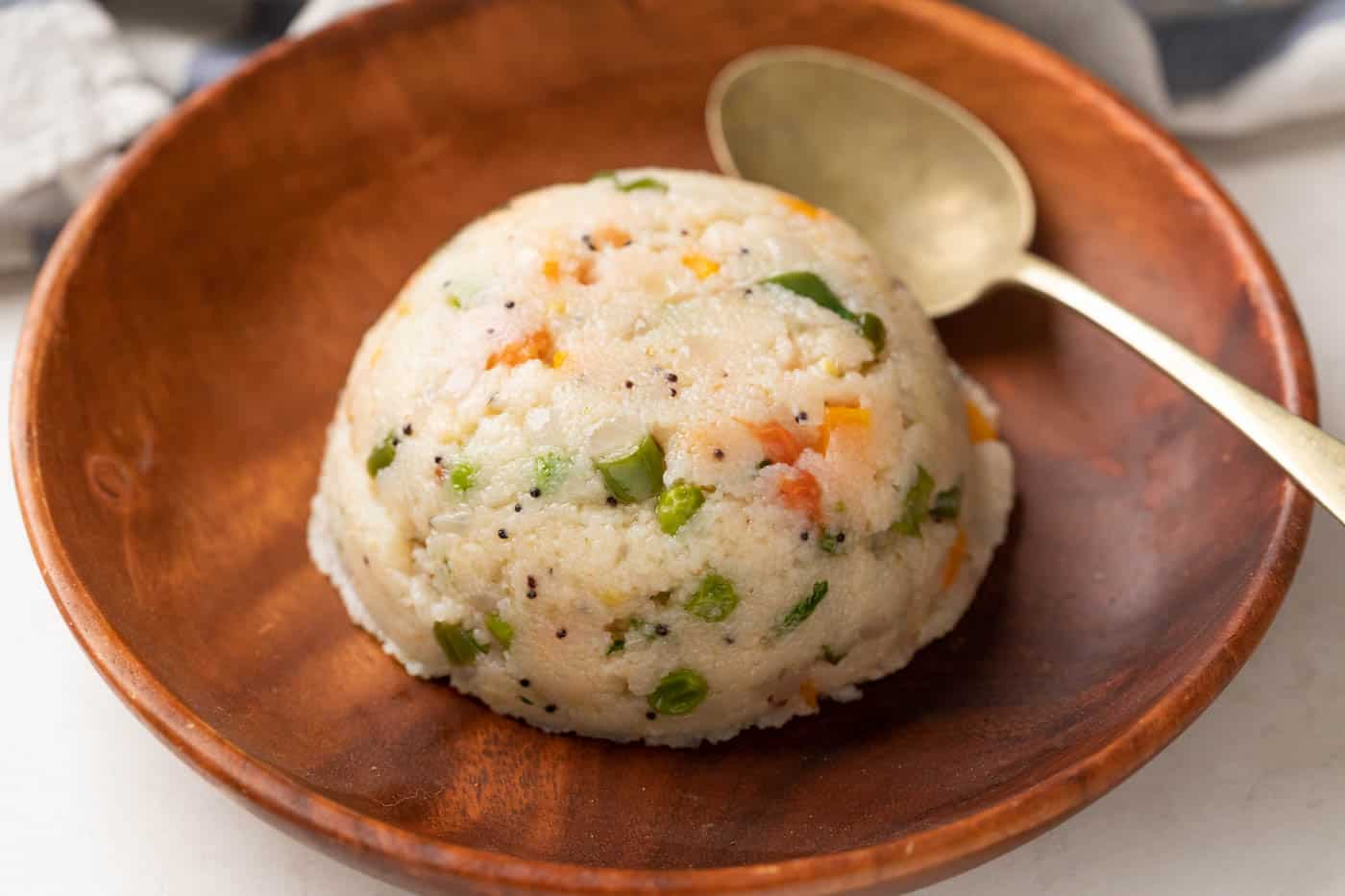
Upma is one of the most popular South Indian breakfast dishes, loved for its light texture, comforting taste, and versatility. Made from semolina (also known as rava or sooji), upma is flavored with tempered spices, curry leaves, and sometimes vegetables to make it both filling and wholesome. Traditionally served hot, it pairs well with coconut chutney, pickle, or even just a drizzle of ghee. Its soft, porridge-like consistency makes it a soothing dish, perfect not only for breakfast but also as a light lunch, evening snack, or even dinner.
The origins of upma lie in South Indian kitchens, particularly in Tamil Nadu, Karnataka, and Andhra Pradesh, where it has been enjoyed for centuries as a staple breakfast. Over time, upma spread across India and evolved into various forms.
In Maharashtra, for example, it is called “upit” and sometimes includes peanuts for added crunch. In Karnataka, “khara bath” is a spicier variation made with more chilies and vegetables. In Northern India, it is often prepared slightly differently, with additional garnishes like fresh coriander and lemon juice. This regional diversity is one of the reasons upma has remained a beloved dish, adaptable to local tastes and available ingredients.
Upma’s popularity is rooted in its simplicity. It requires just a handful of pantry ingredients and can be prepared quickly, making it a go-to option for busy mornings. Beyond that, it is incredibly versatile—you can enrich it with vegetables like carrots, beans, and peas for extra nutrition, or keep it plain with only onions and spices. Some even make variations with oats, millets, or vermicelli instead of semolina for healthier alternatives. This adaptability has made upma not just a household staple but also a regular item on restaurant and hotel breakfast menus.
In today’s health-conscious world, upma has earned respect as a nutritious meal. It is low in fat, provides sustained energy due to its carbohydrate content, and can easily be customized to meet dietary needs. It has also gained global recognition as Indian cuisine continues to spread worldwide. Whether enjoyed traditionally with coconut chutney or with modern twists like cheese or tofu toppings, upma continues to be a timeless dish that satisfies hunger while nourishing the body.
Ingredients
Serves: 4 people
- Semolina (rava/sooji) – 1 cup
- Water – 3 cups
- Onion – 1 medium (finely chopped)
- Green chilies – 2 (chopped)
- Ginger – 1 tsp (grated)
- Curry leaves – 8 to 10
- Mustard seeds – 1 tsp
- Urad dal – 1 tsp
- Chana dal – 1 tsp
- Cashew nuts – 8 to 10 (optional, for crunch)
- Oil or ghee – 3 tbsp
- Salt – to taste
- Fresh coriander leaves – 2 tbsp (chopped)
- Lemon juice – 1 tbsp
Steps
- In a dry pan, lightly roast the semolina on low flame until it turns aromatic and slightly golden. Remove from the pan and set aside.
- Heat oil or ghee in the same pan. Add mustard seeds and allow them to splutter.
- Stir in urad dal, chana dal, and cashew nuts, frying until they turn golden brown.
- Add curry leaves, green chilies, and grated ginger, sautéing for a few seconds until fragrant.
- Add chopped onions and cook until they turn translucent.
- Pour in 3 cups of water and bring it to a boil. Add salt to taste.
- Gradually add the roasted semolina while stirring continuously to avoid lumps.
- Reduce the heat and cook until the semolina absorbs the water and the upma thickens.
- Turn off the heat, cover, and let it rest for 2–3 minutes to allow the flavors to blend.
- Garnish with fresh coriander and a drizzle of lemon juice before serving.
Health Benefits
Upma is a wholesome dish that combines taste and nutrition. Semolina is a good source of complex carbohydrates, which provide steady energy throughout the day. The dals and nuts added during tempering increase the protein and healthy fat content, while vegetables (if included) supply vitamins, minerals, and fiber. Low in cholesterol and easily digestible, upma is suitable for people of all ages, including children and the elderly. Its balance of nutrients makes it an excellent choice for a light yet filling meal.
Kitchen Tip: For an extra fluffy texture, add a spoonful of ghee just before serving, or substitute part of the water with milk for a richer and creamier flavor.