
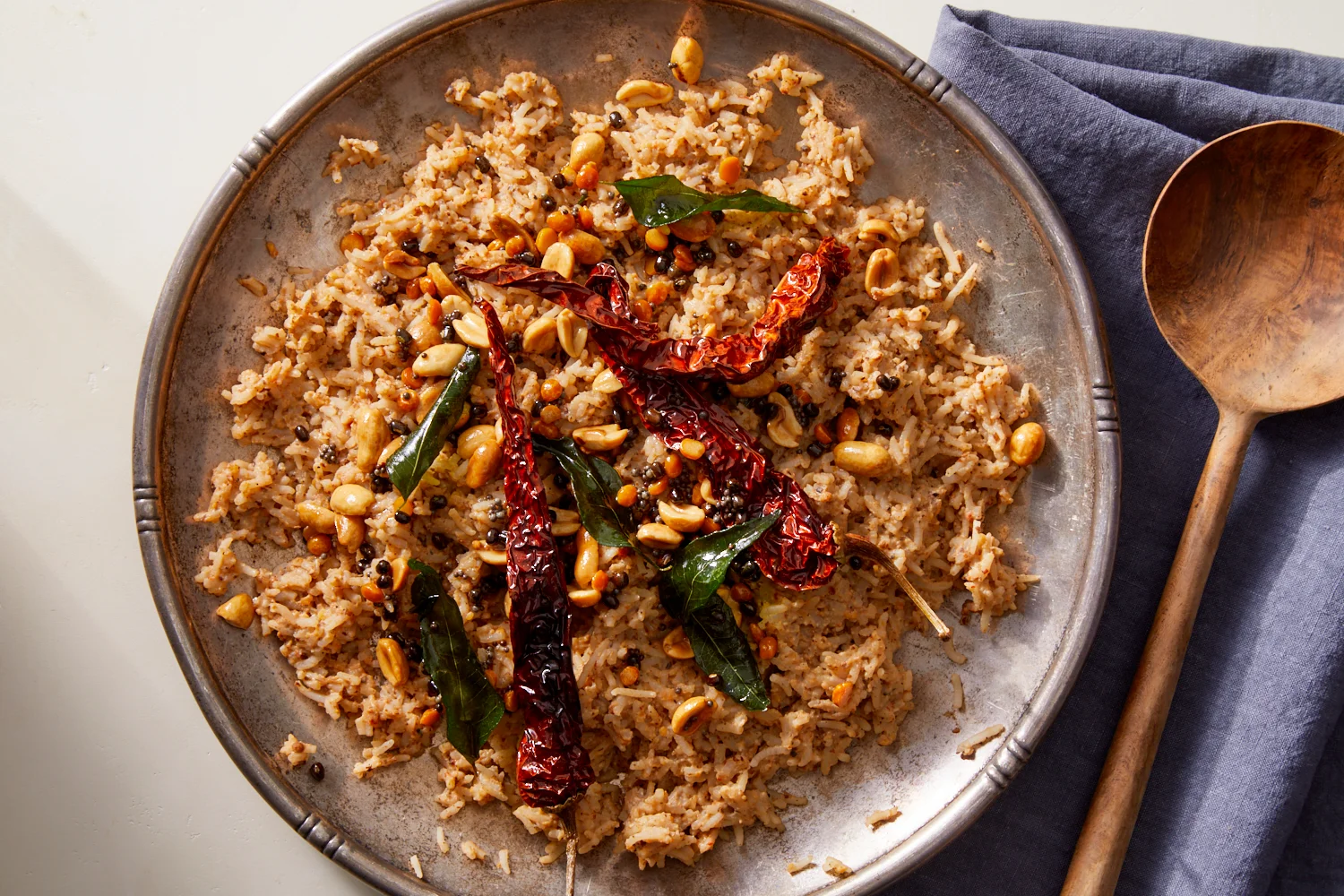
Tamarind rice, also known as Puliyodarai or Puliyogare, is a beloved South Indian delicacy that perfectly balances tangy, spicy, and savory flavors. Prepared with tamarind pulp, aromatic spices, and tempered with curry leaves, mustard seeds, and dry red chilies, this rice dish is both simple and incredibly satisfying. Its vibrant taste makes it a favorite not only in homes but also in temples, where it is often served as prasadam. Tamarind rice stands out as one of those dishes that can be enjoyed on its own, without the need for any side dish, making it perfect for travel, lunchboxes, and festive occasions.
The history of tamarind rice traces back centuries, particularly within Tamil Nadu and Karnataka, where temple kitchens first popularized it as an offering to deities. Tamarind has long been used in Indian cooking for its cooling properties and digestive benefits, making it especially important in hot southern climates. Over time, the dish spread across South India, each region giving it its own distinct touch—Tamil Nadu favors a spicier, tangier version, while Karnataka adds jaggery for a subtle sweetness. Today, tamarind rice is not just limited to religious and festive occasions but is a staple in many households, often prepared in large batches as it keeps well for a day or two without losing its flavor.
What makes tamarind rice truly special is the balance of flavors and the way it transforms plain rice into a gourmet experience. The preparation involves making a tamarind concentrate or paste, which is mixed with cooked rice, infusing each grain with zesty tang and spice. This paste can be made in advance and stored, making tamarind rice a quick yet delicious meal option. It is also extremely versatile—served as part of elaborate feasts, temple prasadam, or as a quick comfort food at home, tamarind rice never fails to delight.
Its popularity has also gone global, as South Indian expatriates have carried the recipe abroad, introducing it to new communities. Many Indian restaurants overseas now serve tamarind rice as part of thali meals, and it has found admirers among people who enjoy bold and tangy flavors. Whether paired with papadam and pickle or enjoyed alone, tamarind rice continues to hold a special place in the hearts of food lovers.
Ingredients
Serves: 4 people
- Tamarind – 1 lemon-sized ball (soaked in 1 cup warm water)
- Cooked rice – 3 cups (cooled)
- Sesame oil – 3 tbsp
- Mustard seeds – 1 tsp
- Dry red chilies – 3–4
- Curry leaves – 10–12
- Green chilies – 2 (slit)
- Chana dal (split chickpeas) – 1 tbsp
- Urad dal (split black gram) – 1 tbsp
- Hing (asafoetida) – ¼ tsp
- Turmeric powder – ½ tsp
- Red chili powder – 1 tsp
- Jaggery – 1 tsp (optional, for balance)
- Salt – to taste
- Roasted peanuts – 2 tbsp
Steps
- Soak tamarind in warm water for 15 minutes and extract a thick pulp. Discard seeds and fibers.
- Heat sesame oil in a pan, add mustard seeds, and let them splutter.
- Add chana dal, urad dal, curry leaves, dry red chilies, and green chilies. Fry until golden.
- Stir in hing, turmeric powder, and red chili powder. Mix well.
- Pour in the tamarind pulp along with salt and jaggery. Cook on medium heat until the mixture thickens and oil starts to separate. This forms the tamarind paste.
- Spread the cooled rice in a wide plate or bowl. Pour the prepared tamarind paste over it.
- Gently mix until every grain of rice is coated with the tangy, spiced mixture.
- Garnish with roasted peanuts for crunch and flavor.
- Rest the tamarind rice for 20–30 minutes before serving, as it tastes best once the flavors meld together.
Health Benefits
Tamarind rice is not just delicious but also nourishing. Tamarind is rich in antioxidants, vitamins, and minerals, especially magnesium and potassium, which aid digestion and improve heart health. The dals used in tempering provide protein, while peanuts add healthy fats and crunch. Sesame oil, traditionally used in this recipe, is packed with antioxidants and has anti-inflammatory properties. Since tamarind rice can be made with minimal oil and plenty of spices, it offers a healthy, satisfying meal that is easy to digest.
Kitchen Tip: Always use cooled rice while preparing tamarind rice, as hot rice can turn mushy when mixed with tamarind paste.