
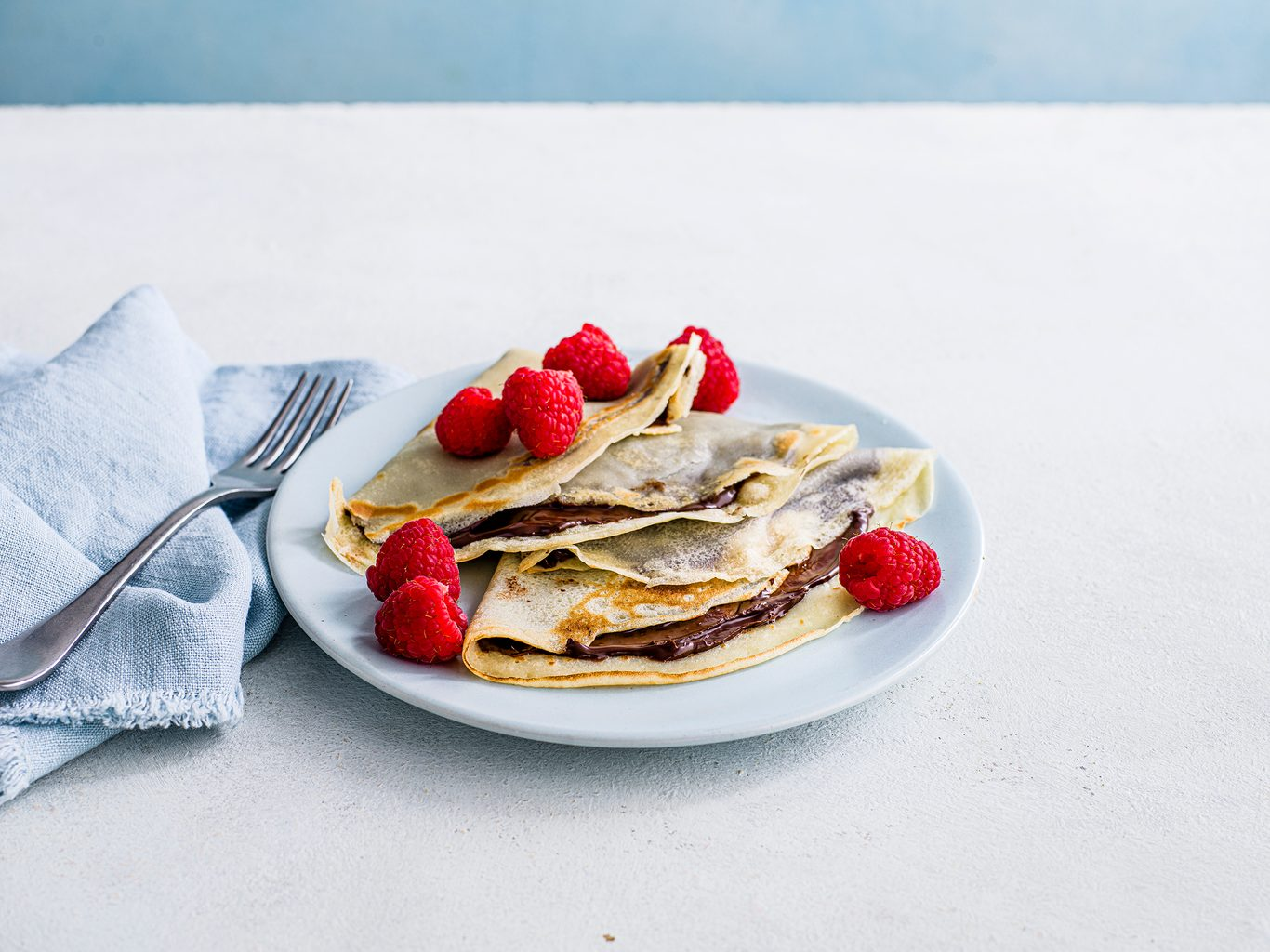
Crêpes are thin, delicate pancakes originating from France, enjoyed around the world as breakfast, dessert, or a snack. This vegan version uses plant-based ingredients to create a smooth, flexible batter that cooks into soft, golden crêpes without eggs or dairy. Crêpes are highly versatile, allowing fillings ranging from fresh fruits and nut butter to savory vegetables and vegan cheese, making them a crowd-pleasing dish for any meal of the day.
The history of this recipe dates back to Brittany in northwestern France, where buckwheat and wheat flours were commonly used to make these thin pancakes. Traditionally, crêpes were served for festivals, family gatherings, and holidays, often accompanied by sweet or savory fillings. Over time, this recipe spread across France and beyond, gaining popularity worldwide for their simplicity, adaptability, and elegance. The vegan adaptation maintains the light texture and pliability of traditional crêpes while making them suitable for plant-based diets, allowing everyone to enjoy this French classic.
Crêpes are celebrated for their delicate texture and versatility. The batter is thin enough to spread evenly across a skillet, creating a tender and slightly crisp edge. Sweet crêpes may be filled with fruit compotes, vegan chocolate, or coconut cream, while savory versions can include sautéed vegetables, mushrooms, or vegan cheese. The key to perfect crêpes lies in the batter consistency, a lightly oiled pan, and careful cooking to ensure even browning without tearing. The ability to fold, roll, or stack crêpes makes them visually appealing and ideal for both casual and formal dining.
Nutritionally, vegan crêpes are a balanced source of energy and can be enhanced with nutrient-dense fillings. Plant-based milk and flour supply carbohydrates and protein, while optional additions such as whole-grain flour or flaxseed increase fiber and omega-3 fatty acids. By choosing wholesome fillings like fresh fruits, nuts, or plant-based spreads, crêpes can provide vitamins, minerals, and antioxidants. Despite being a dessert or snack, vegan crêpes offer a flexible platform for creating meals that are both flavorful and nourishing.
Ingredients
Serves: 4 people
- All-purpose flour – 1 cup
- Plant-based milk – 1¼ cups
- Maple syrup or sugar – 1 tbsp (optional, for slight sweetness)
- Vegetable oil – 1 tbsp (plus extra for pan)
- Vanilla extract – 1 tsp
- Salt – ¼ tsp
- Optional fillings: fresh berries, vegan chocolate spread, nut butter, sautéed vegetables
Steps
- In a mixing bowl, whisk together flour, salt, and sugar (if using).
- Gradually add plant-based milk, vegetable oil, and vanilla extract, whisking until a smooth, thin batter forms.
- Heat a non-stick skillet over medium heat and lightly brush with oil.
- Pour a small ladle of batter into the skillet and tilt it in a circular motion to spread the batter evenly and thinly.
- Cook for 1–2 minutes until the edges begin to lift and the underside is lightly golden. Flip the crêpe and cook for an additional 1 minute.
- Remove the crêpe from the skillet and place on a plate. Repeat with remaining batter, stacking crêpes with parchment paper to prevent sticking.
- Fill each crêpe with desired sweet or savory fillings and fold, roll, or stack as preferred.
- Serve immediately, garnished with fruit, syrup, or fresh herbs, depending on filling choice.
Health Benefits
This Dish provide energy from carbohydrates and plant-based protein while remaining low in saturated fat compared to traditional recipes. Using plant-based milk and oil reduces cholesterol intake, while whole-grain flour or additional seeds can increase fiber and micronutrient content. By incorporating fresh fruits, vegetables, or nuts as fillings, crêpes become rich in antioxidants, vitamins, and minerals. The thin batter and moderate use of oil make this dish a lighter, yet satisfying option for breakfast, brunch, dessert, or snack. Crêpes offer versatility and a platform for nutrient-rich ingredients, combining taste, texture, and nutrition in a single dish.
Kitchen Tip: For perfectly even crêpes, let the batter rest for 20–30 minutes before cooking to relax the gluten and create a smoother, more pliable texture.