
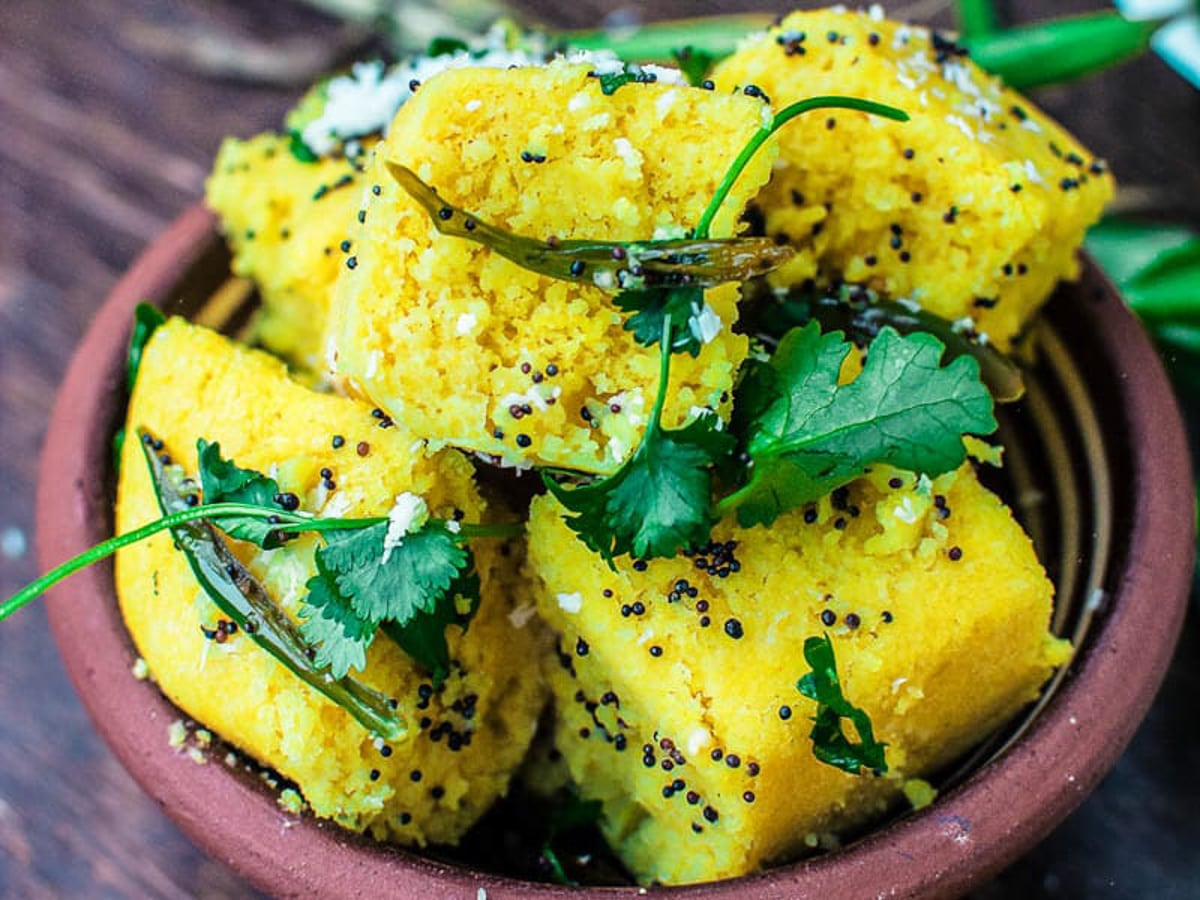
Dhokla is one of the most celebrated treasures of Gujarati cuisine, a dish that beautifully reflects the state’s love for light, wholesome, and flavorful food. Its origin is deeply rooted in the culinary traditions of Gujarat, a region known for creating meals that are both nourishing and flavorful, often using simple pantry staples. The earliest references to dhokla can be traced back several centuries, when it was crafted from fermented pulses and rice to create a filling dish that was easy to digest and packed with protein.
Because it is steamed instead of fried, it became synonymous with sattvic (pure) food, making it a popular offering in temples and during religious fasts. Over time, dhokla traveled beyond the temple kitchens and royal households to become a beloved staple in every Gujarati home. As the years passed, dhokla evolved into many variations, reflecting the creativity and adaptability of Gujarati cooking.
From the classic khaman dhokla made with chickpea flour to versions like rava dhokla, sandwich dhokla, and even modern fusion twists with cheese and vegetables, this humble dish has taken on countless forms while retaining its essence. What sets dhokla apart is its unique combination of tangy, sweet, and spicy flavors paired with its soft, spongy texture. It is not just food, but a cultural experience that tells the story of Gujarat’s balance between tradition and innovation.
Whether eaten plain with a drizzle of tempering or paired with spicy green chutney and sweet tamarind chutney, every bite carries a burst of nostalgia and comfort. Today, dhokla has crossed regional boundaries and has found a permanent spot on the menu of Indian restaurants worldwide. Its popularity comes from its versatility: it can be enjoyed at breakfast, as a mid-day snack, or even as a light dinner.
Street vendors in Ahmedabad sell steaming hot trays of dhokla to eager crowds, while five-star hotels present it as part of elaborate buffets. In Indian households, it is one of the most frequently prepared snacks for guests because it is quick, tasty, and appeals to every age group. Dhokla’s rise to global fame reflects how traditional Indian recipes can charm people everywhere, offering comfort and novelty at the same time.
Beyond being delicious, dhokla is also a symbol of community and hospitality. It is served during festivals like Diwali, Holi, and Navratri, making it part of joyous celebrations. It often features in lunchboxes, picnics, and travel food because it remains soft and flavorful for hours. In modern kitchens, instant dhokla mixes and microwave-friendly recipes have made it even more accessible to people who crave the authentic taste but have little time. Whether you enjoy it at a bustling street corner in Gujarat or in a quiet kitchen halfway across the globe, dhokla continues to embody the warmth, simplicity, and pride of Gujarat.
Dhokla Ingredients (Serves 4)
- Gram flour (besan) – 1 cup (120 g)
- Semolina (rava/sooji) – 2 tbsp
- Yogurt (curd) – ½ cup (120 ml), slightly sour
- Water – ½ cup (120 ml), adjust as needed for smooth batter
- Lemon juice – 1 tbsp
- Green chili-ginger paste – 1 tsp
- Turmeric powder – ¼ tsp
- Salt – 1 tsp (or to taste)
- Sugar – 1 tsp
- Eno fruit salt – 1 tsp (or baking soda ½ tsp as substitute)
For Tempering
- Oil – 2 tbsp
- Mustard seeds – 1 tsp
- Green chilies – 2, slit lengthwise
- Curry leaves – 8–10
- Sesame seeds – 1 tsp (optional)
- Water – ¼ cup (60 ml)
- Sugar – 1 tbsp
- Lemon juice – 1 tbsp
- Fresh coriander leaves – 2 tbsp, finely chopped
- Fresh grated coconut – 2 tbsp (optional)
Steps
- In a mixing bowl, combine gram flour, semolina, yogurt, salt, sugar, turmeric, lemon juice, and green chili-ginger paste. Gradually add ½ cup water and whisk into a smooth, lump-free batter. The batter should be thick yet of pouring consistency. Let it rest for 10–15 minutes.
- Just before steaming, add 1 tsp Eno fruit salt (or baking soda). Pour 1 tsp water over it to activate. Mix gently in one direction—this will make the batter frothy and airy.
- Grease a steel or glass steaming tray (thali or cake tin). Pour the batter immediately into it. Place the tray in a steamer with boiling water and steam for 15–18 minutes on medium flame. Check by inserting a toothpick—if it comes out clean, your dhokla is ready. Let it cool slightly before unmolding.
- For tempering, heat oil in a small pan. Add mustard seeds and let them crackle. Add green chilies, curry leaves, and sesame seeds, and sauté for a few seconds. Mix ¼ cup water with 1 tbsp sugar and 1 tbsp lemon juice, then pour this liquid into the tempering. Let it simmer for 30 seconds.
- Pour this tempering evenly over the steamed dhokla so it soaks in the sweet, tangy, and spicy flavors. Garnish with fresh coriander and grated coconut.
- Cut into squares or diamond shapes, serve warm with green chutney or tamarind chutney, and enjoy the true taste of Gujarat.
Kitchen Tip: If you want extra soft and fluffy dhokla, always whisk the batter well to incorporate air and steam it immediately after adding Eno.