
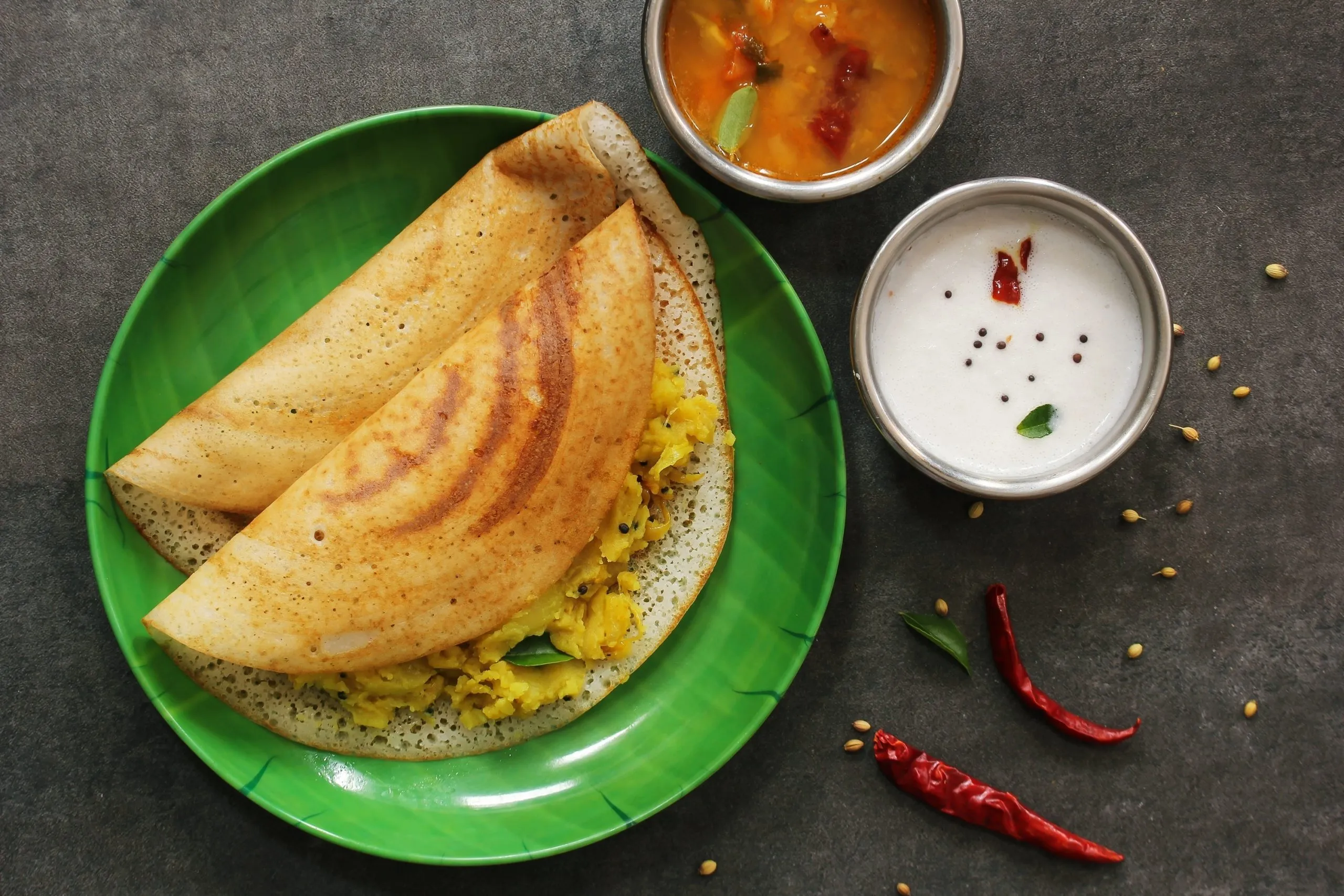
Masala dosa is one of South India’s most iconic dishes, celebrated across the country and beloved by food enthusiasts worldwide. Its origins trace back to Karnataka, particularly in the city of Udupi, where temple cooks developed unique vegetarian delicacies that shaped much of South Indian cuisine. The dosa itself, a crisp and thin fermented crepe made from rice and lentils, has been enjoyed for centuries, but the addition of spiced potato filling—the “masala”—is believed to have emerged in the 16th century. This innovation turned the humble dosa into a wholesome, flavorful, and satisfying meal.
By the 20th century, masala dosa had spread beyond South India, gaining immense popularity in cities like Mumbai, Delhi, and Kolkata, eventually becoming a staple in restaurants across India. The dish gained a reputation as a perfect blend of simplicity and sophistication—crispy on the outside, soft and flavorful inside, and served with vibrant accompaniments like coconut chutney and tangy sambar. Its affordability and ability to be both street food and a sit-down restaurant dish made it accessible to everyone, from college students to working professionals.
The global popularity of masala dosa grew as Indian restaurants expanded internationally. Today, whether in New York, London, or Sydney, masala dosa is a star attraction on Indian menus. Its appeal lies not only in its taste but also in the artistry of preparing the perfect dosa—achieving the right fermentation, the right batter consistency, and the skillful spreading of the batter into a thin, golden, and crisp crepe. Watching a dosa being made in a bustling restaurant kitchen is an experience in itself, adding to the dish’s cultural charm.
Masala dosa is more than just food; it represents tradition, innovation, and cultural pride. It brings together the nourishing qualities of rice and lentils with the aromatic richness of South Indian spices. For many Indians, it is a comfort food that evokes memories of family breakfasts, festive occasions, or weekend brunches. For food lovers around the world, it stands as a shining example of Indian culinary artistry that balances flavor, texture, and nutrition in every bite.
Ingredients (Serves 4, makes 8 Masala Dosas)
For Dosa Batter
- Raw rice – 2 cups (400 g)
- Urad dal (split black gram) – ½ cup (100 g)
- Fenugreek seeds – 1 tsp
- Salt – 1 tsp (to taste)
- Water – as needed (for soaking and grinding)
For Potato Masala Filling
- Potatoes – 4 medium, boiled and mashed
- Onion – 2 medium, thinly sliced
- Green chilies – 2, finely chopped
- Ginger – 1 tsp, grated
- Curry leaves – 8–10
- Mustard seeds – 1 tsp
- Turmeric powder – ½ tsp
- Salt – to taste
- Oil – 2 tbsp
- Fresh coriander – 2 tbsp, chopped
- Lemon juice – 1 tsp (optional)
Steps
- Wash and soak rice, urad dal, and fenugreek seeds separately in water for 4–6 hours.
- Grind them into a smooth batter, adding water gradually. Mix together, add salt, and let the batter ferment overnight or for 8–10 hours until it doubles in volume.
- To prepare the masala, heat oil in a pan. Add mustard seeds and let them splutter. Then add curry leaves, green chilies, and ginger. Sauté briefly.
- Add sliced onions and cook until golden. Stir in turmeric powder.
- Add the boiled and mashed potatoes, mix well, and season with salt. Sprinkle fresh coriander and lemon juice, then set aside.
- Heat a non-stick or cast-iron dosa tawa (griddle). Pour a ladleful of batter in the center and spread it evenly in a circular motion to form a thin crepe.
- Drizzle a few drops of oil around the edges and cook until the bottom is golden and crisp.
- Place 2–3 spoonfuls of the potato masala filling in the center of the dosa. Fold it over and serve hot.
- Repeat with the remaining batter and masala. Serve each dosa with coconut chutney and sambar for an authentic experience.
Health Benefits
Masala dosa is a wholesome dish that provides a balanced mix of carbohydrates, proteins, and essential nutrients. The dosa batter, made from fermented rice and lentils, is rich in protein and promotes gut health due to natural probiotics formed during fermentation. The potato filling offers carbohydrates for energy, while onions, curry leaves, and spices add antioxidants and digestive benefits. By reducing oil and adding more vegetables to the filling, masala dosa can be made even more nutritious without compromising taste. It is naturally gluten-free, making it suitable for those with gluten sensitivities.
Kitchen Tip: Always prepare dosa on a well-heated tawa; sprinkling a little water before spreading the batter ensures perfect crispness.