
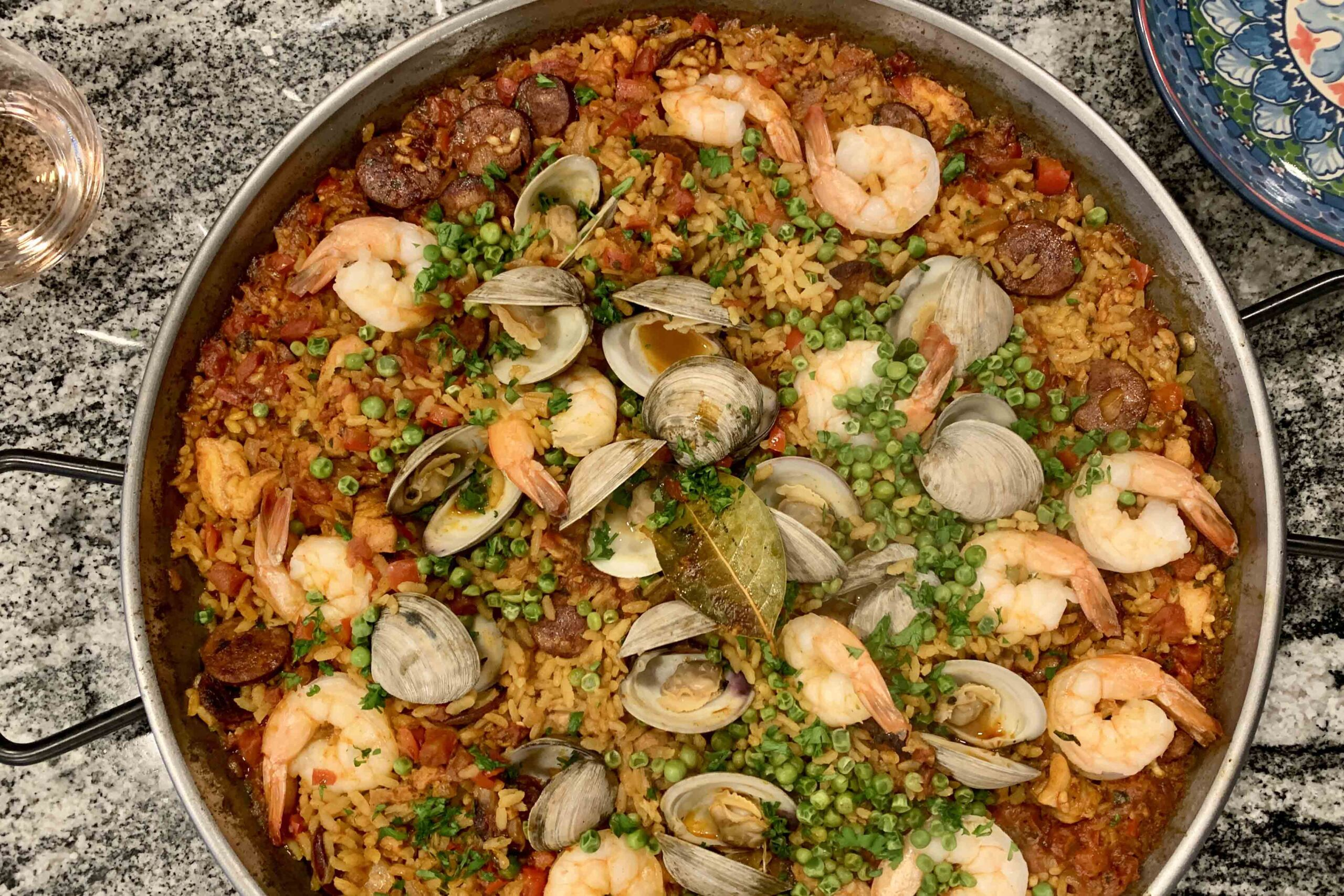
Paella is one of Spain’s most iconic dishes, a vibrant and flavorful rice-based delicacy that originated in the Valencia region. The history of paella dates back to the 15th and 16th centuries, when farm workers in Valencia would prepare a hearty one-pan meal in the fields using whatever ingredients were available—often rice, beans, snails, and occasionally meat. Cooked over an open fire in a wide, shallow pan, the dish evolved into what is now recognized as paella. The word “paella” itself comes from the Latin word patella, meaning pan, highlighting how closely tied the dish is to its unique method of preparation.
Over time, paella grew from a humble meal of peasants into a celebrated Spanish specialty. By the 19th century, it was gaining recognition as a signature dish of Valencia and eventually the entire country. As trade and exploration brought new ingredients to Spain, such as tomatoes, peppers, and saffron, paella recipes evolved and became more elaborate. The addition of seafood, chicken, rabbit, and spices elevated paella into a dish worthy of feasts and celebrations, and it became deeply associated with family gatherings, festivals, and regional pride.
The popularity of paella spread across Spain and later the world, with numerous variations emerging along the way. Traditional Valencian paella features chicken, rabbit, and sometimes snails, while seafood paella, rich with mussels, clams, shrimp, and squid, became a coastal favorite. Mixed paella combines both meat and seafood, while modern vegetarian versions highlight seasonal vegetables. Each variety reflects the adaptability of paella while keeping rice and saffron as the heart of the dish. Today, paella is not only a Spanish staple but also a symbol of Spanish culture, enjoyed in homes, restaurants, and festivals globally.
What makes paella so special is not just its flavor but the communal way it is prepared and eaten. Traditionally, paella is cooked outdoors over an open flame, with families and friends gathering around the pan to share in the process. Its golden rice, infused with saffron, absorbs the essence of all the ingredients, creating a medley of flavors in every bite. Served hot and straight from the pan, paella embodies both the richness of Spanish culinary traditions and the warmth of community dining.
Ingredients
For the Paella
- Bomba or Arborio rice – 2 cups
- Chicken thighs – 300 g, bone-in and skin-on
- Rabbit meat (optional, traditional) – 200 g
- Olive oil – 4 tbsp
- Onion – 1 large, finely chopped
- Garlic – 4 cloves, minced
- Red bell pepper – 1, sliced
- Tomatoes – 2 medium, grated or blended
- Green beans – 1 cup
- Saffron threads – a pinch, soaked in 2 tbsp warm water
- Smoked paprika – 1 tsp
- Chicken or seafood stock – 5 cups
- Salt – 1 ½ tsp (adjust to taste)
- Black pepper – ½ tsp
For Seafood Version (Optional Additions)
- Shrimp – 200 g, peeled
- Mussels – 200 g, cleaned
- Squid rings – 150 g
For Garnish
- Lemon wedges – 2, cut into slices
- Fresh parsley – handful, chopped
Steps
- Heat olive oil in a wide paella pan over medium heat. Add chicken (and rabbit, if using) and sear until golden brown. Remove and set aside.
- In the same pan, sauté onion, garlic, and red bell pepper until soft and fragrant.
- Add grated tomatoes and cook until the mixture thickens into a rich base, about 5 minutes.
- Stir in paprika, saffron (with its soaking water), and green beans. Mix well.
- Add the rice, stirring to coat with the tomato mixture and spices.
- Pour in hot stock, season with salt and pepper, and bring to a gentle simmer. Spread rice evenly across the pan without stirring again.
- Return the seared chicken (and rabbit) to the pan, nestling them into the rice. Cook uncovered for about 15 minutes.
- If using seafood, add shrimp, mussels, and squid on top of the rice at this stage. Allow mussels to open and shrimp to turn pink.
- Continue cooking until the rice is tender and liquid absorbed, about 20–25 minutes total. Avoid stirring so the bottom develops the traditional crispy socarrat (caramelized crust).
- Remove from heat, cover with a clean cloth, and let rest for 5 minutes. Garnish with lemon wedges and parsley before serving straight from the pan.
Health Benefits
Paella, when made with fresh and quality ingredients, can be both delicious and nutritious. The rice provides carbohydrates for energy, while saffron offers antioxidant properties. Chicken and rabbit bring lean protein, and seafood adds omega-3 fatty acids that support heart health. Vegetables like beans, peppers, and tomatoes supply fiber, vitamins, and minerals. Olive oil, the primary cooking fat, is rich in healthy monounsaturated fats that support cardiovascular well-being. With its balanced mix of protein, healthy fats, and vegetables, paella can be enjoyed as a wholesome and complete meal.
Kitchen Tip: For the best socarrat—the crispy golden crust at the bottom—resist the urge to stir the rice once the stock is added, and cook on medium heat until a light crackling sound begins.