
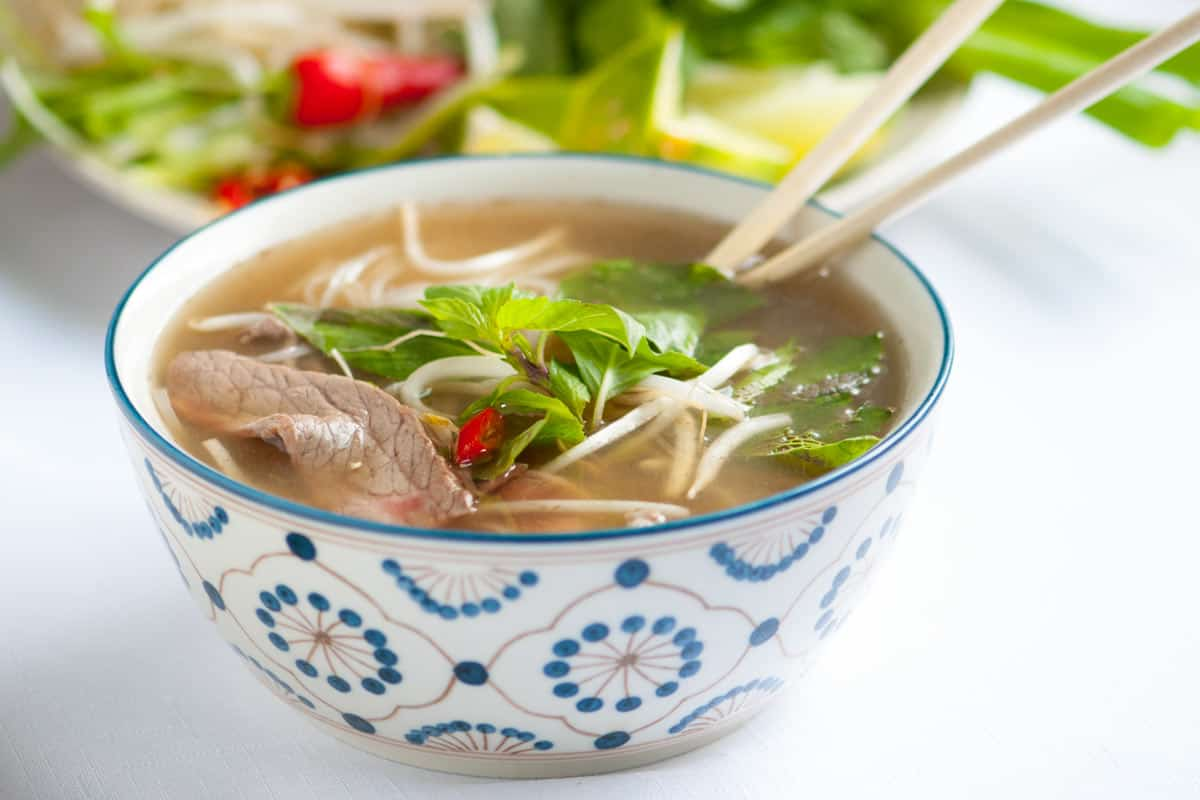
Pho is Vietnam’s most beloved noodle soup, known for its rich aromatic broth, tender rice noodles, and layers of fresh herbs and toppings. Its history dates back to the late 19th and early 20th centuries in northern Vietnam, particularly around Hanoi. Many believe pho was influenced by both Chinese and French culinary traditions during the colonial period. The French popularized beef consumption in Vietnam, while Chinese communities introduced rice noodles and broth-based dishes. Over time, Vietnamese cooks combined these influences into something entirely unique: pho, a soup that quickly became a national treasure.
Originally, pho was a simple street food sold by vendors who carried their broth and noodles in wooden poles balanced on their shoulders. Early versions were made with beef, since pork was considered less common under French influence. As pho spread from northern Vietnam to the south, it adapted to regional tastes—northern pho being simpler and more broth-forward, while southern pho became richer and sweeter with additional herbs, bean sprouts, and sauces. This regional diversity helped pho gain a broader appeal and cement itself as a dish loved by all Vietnamese people.
Pho’s popularity skyrocketed during the 20th century, especially after the Vietnam War, when many Vietnamese families migrated abroad and brought their culinary traditions with them. Pho restaurants became a familiar sight in major cities across the world, from Paris to Los Angeles, making the dish a global comfort food. Its balance of flavors—savory, aromatic, slightly sweet, and umami—resonated with international diners, ensuring its place as one of the most famous soups worldwide.
What makes pho truly special is its complexity hidden behind a simple appearance. A good pho broth is simmered for hours, often infused with spices like star anise, cinnamon, and cloves, which give it a signature fragrance. The noodles are soft yet chewy, the thin slices of beef or chicken tender, and the fresh herbs like Thai basil and cilantro provide brightness. Served steaming hot, pho is more than a meal—it’s a symbol of Vietnamese culture, resilience, and hospitality, enjoyed both as a hearty breakfast and a late-night comfort food.
Pho Ingredients
For the Broth
- Beef bones (marrow or knuckle bones) – 1.5 kg
- Water – 5 liters
- Onion – 2 large, halved and charred
- Ginger – 3-inch piece, sliced and charred
- Star anise – 3 whole
- Cinnamon stick – 1 large
- Cloves – 5
- Coriander seeds – 1 tbsp
- Fish sauce – 4 tbsp
- Rock sugar – 1 tbsp
- Salt – 1 tbsp
For the Noodles and Meat
- Flat rice noodles – 400 g
- Beef brisket – 300 g, simmered with broth until tender
- Raw beef (sirloin or eye of round) – 200 g, thinly sliced
For Garnish
- Bean sprouts – 2 cups
- Thai basil – 1 handful
- Fresh cilantro – ½ cup
- Spring onions – 3, finely chopped
- Lime wedges – 2
- Fresh chili slices – 1–2 (optional)
- Hoisin sauce – 2 tbsp (for serving)
- Sriracha – 1 tbsp (for serving)
Steps
- Place beef bones in a large pot, cover with water, and boil for 10 minutes. Drain and rinse to remove impurities.
- In a dry skillet, char onion and ginger until lightly blackened for a smoky flavor.
- Fill a large pot with 5 liters of fresh water, add cleaned bones, charred onion, and ginger. Bring to a simmer.
- Toast star anise, cinnamon, cloves, and coriander seeds in a dry pan until fragrant, then add to the broth.
- Simmer gently for 4–5 hours, skimming off any foam or fat. Add fish sauce, rock sugar, and salt toward the end.
- Strain the broth, discarding solids, and keep warm.
- Cook rice noodles according to package instructions, then rinse under cold water to stop cooking.
- To assemble, place a portion of noodles into bowls. Add thinly sliced raw beef and cooked brisket.
- Pour steaming hot broth directly over the raw beef so it cooks in the bowl.
- Top with bean sprouts, Thai basil, cilantro, spring onions, and lime wedges. Serve with hoisin and sriracha on the side.
Health Benefits
Pho is not only comforting but also packed with nutrients. The long-simmered bone broth is rich in collagen, minerals, and amino acids that support joint and gut health. Rice noodles provide an easily digestible source of carbohydrates, while beef adds protein, iron, and vitamin B12, supporting muscle growth and energy. Fresh herbs like basil and cilantro contribute antioxidants and aid digestion, while bean sprouts add fiber and vitamin C. When eaten in moderation and with lean cuts of beef, pho is a wholesome and balanced meal.
Kitchen Tip: To slice beef paper-thin for pho, place it in the freezer for 20 minutes before cutting—it makes the process much easier.