
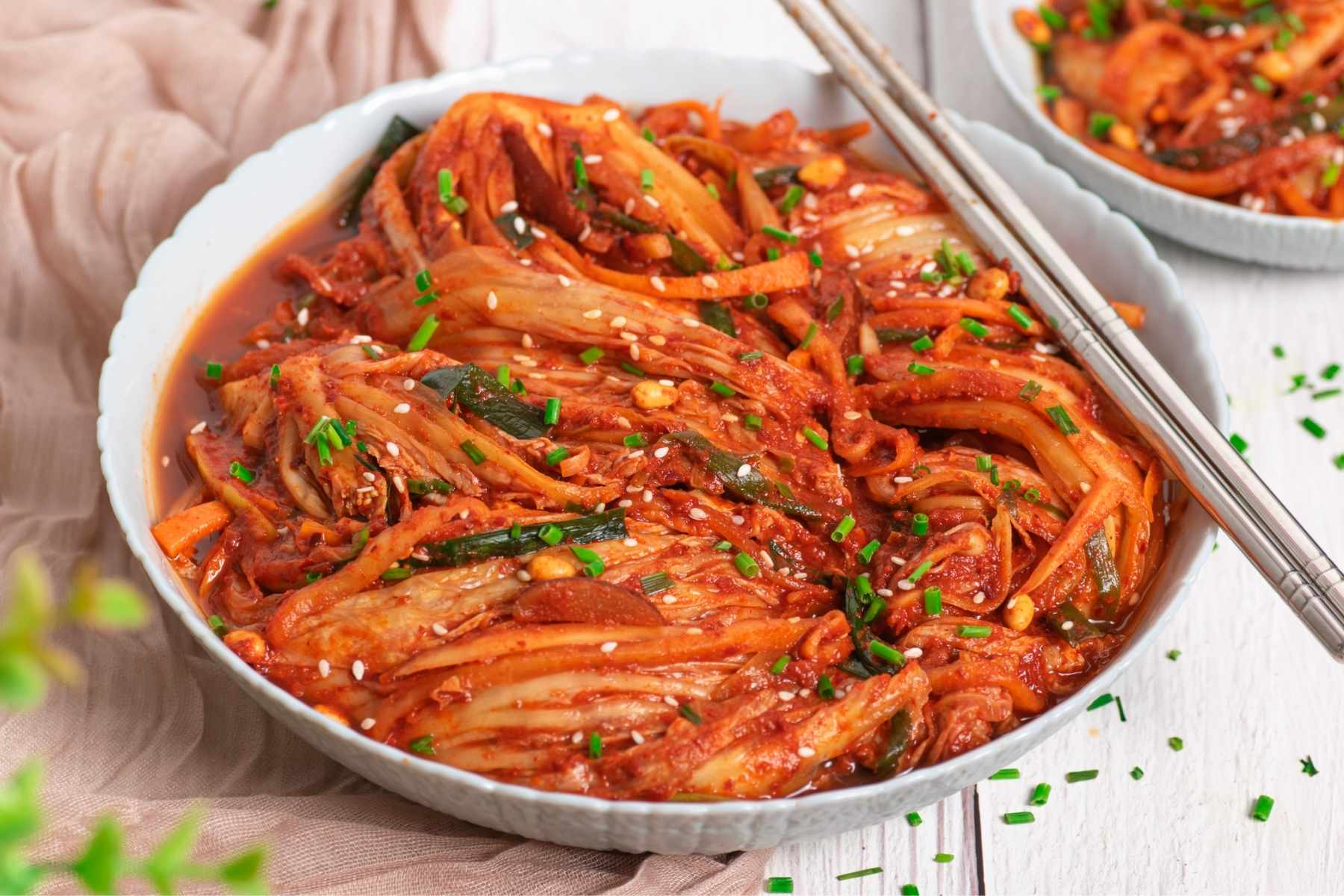
Kimchi is one of the most iconic dishes in Korean cuisine, celebrated worldwide for its bold flavors and incredible health benefits. It is a traditional fermented side dish made from vegetables, primarily napa cabbage and Korean radish, combined with a flavorful mix of chili pepper, garlic, ginger, and fish sauce. Kimchi is not just food—it is a cultural heritage of Korea that has stood the test of time. In Korean households, kimchi is a staple that accompanies almost every meal, from rice and soups to noodles and stews.
The origins of kimchi date back over 2,000 years to ancient Korea, where it began as a way to preserve vegetables during harsh winters. Originally, kimchi was a simple salted vegetable dish, but over centuries, the addition of chili peppers, which arrived in Korea in the 16th century, transformed it into the vibrant, spicy version we know today. Kimchi-making, known as Kimjang, is such an important cultural tradition that UNESCO recognized it as an Intangible Cultural Heritage of Humanity.
In modern times, kimchi has gained international popularity, not just for its unique taste but also for its health-promoting qualities. It is served in Korean restaurants worldwide and has even found its way into global fusion cuisine—appearing in burgers, tacos, and even pizzas. Its appeal lies in the perfect balance of sour, spicy, and umami flavors, along with a satisfying crunch. Whether you enjoy it as a side dish or use it as an ingredient in recipes like kimchi fried rice or kimchi stew, it is incredibly versatile.
Making kimchi at home may seem intimidating, but it is surprisingly simple with the right technique. The process involves salting the cabbage to draw out moisture, coating it with a spicy paste, and then allowing it to ferment. The fermentation not only develops its tangy flavor but also enhances its nutritional value, making it a superfood in every sense.
Ingredients
Serves: 6 people
- Napa cabbage – 1 large head (about 1.5 kg)
- Korean radish – 200 g (julienned)
- Salt – ½ cup (for salting cabbage)
- Water – 5 cups
- Garlic – 8 cloves
- Ginger – 1-inch piece
- Korean red chili pepper flakes (gochugaru) – ½ cup
- Fish sauce – 3 tbsp
- Sugar – 1 tbsp
- Green onions – 4 (chopped)
- Carrot – 1 small (julienned)
Steps
- Cut the napa cabbage into quarters lengthwise and remove the core. Chop into large pieces and place in a large bowl.
- Dissolve ½ cup of salt in 5 cups of water and pour over the cabbage. Mix well and let it sit for 2 hours, turning occasionally to ensure even salting.
- Rinse the salted cabbage under cold water 2–3 times to remove excess salt, then drain thoroughly.
- In a blender, combine garlic, ginger, fish sauce, sugar, and a little water to make a paste. Transfer to a bowl and mix in Korean chili flakes to form the kimchi seasoning paste.
- Add the radish, carrot, and green onions to the seasoning paste and mix well.
- Wearing gloves, gently coat each cabbage piece with the seasoning mixture, making sure all layers are covered.
- Pack the seasoned cabbage into a clean airtight jar, pressing down to remove air pockets. Leave some space at the top for fermentation gases.
- Let the jar sit at room temperature for 1–2 days to kickstart fermentation, then refrigerate. Kimchi will develop its flavor over time and can be enjoyed for several weeks.
Health Benefits
Kimchi is a probiotic powerhouse, thanks to the fermentation process that promotes the growth of healthy bacteria. These probiotics support gut health, boost immunity, and aid digestion. It is also low in calories but high in fiber, vitamins A, B, and C, and antioxidants. The inclusion of garlic, ginger, and chili further enhances its anti-inflammatory and immune-boosting properties, making it a fantastic addition to a balanced diet.
Kitchen Tip: For milder kimchi, reduce the amount of chili flakes. If you prefer it extra tangy, allow it to ferment longer before refrigerating.