
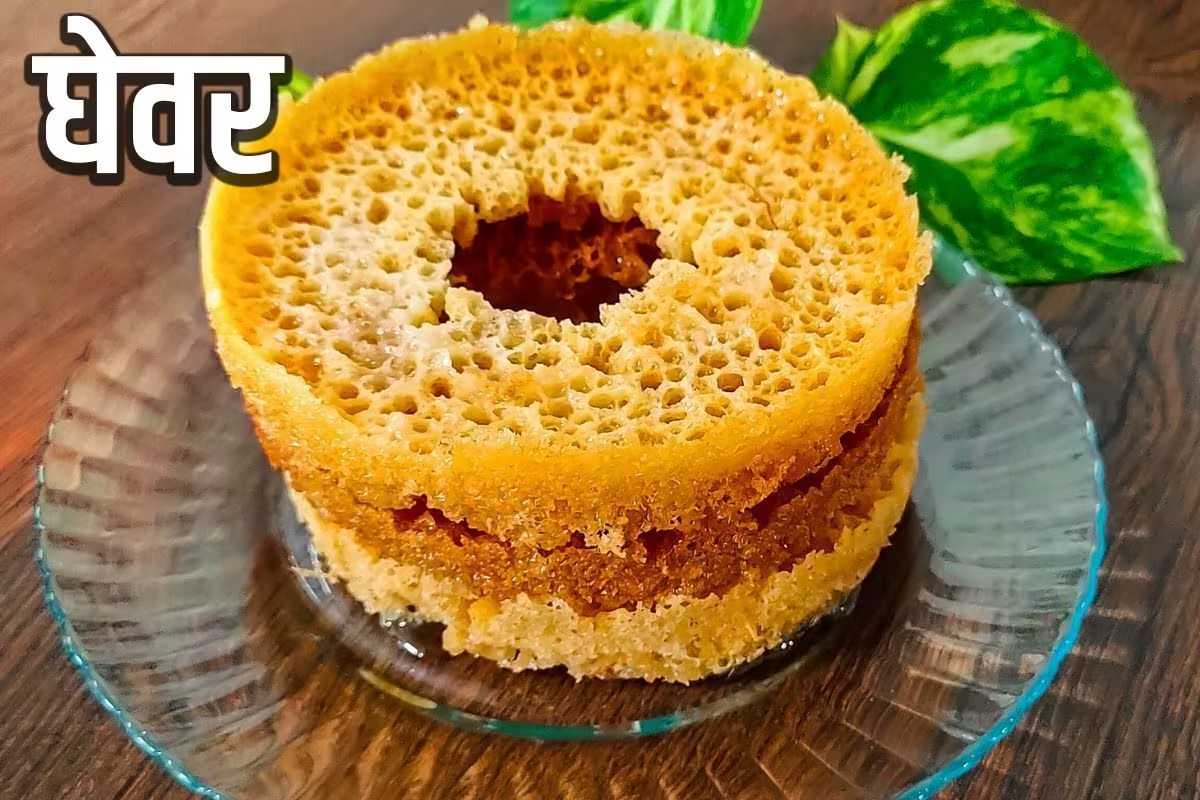
Ghevar is a traditional Rajasthani sweet that holds a special place in Indian festive cuisine. Known for its intricate honeycomb-like structure and crispy texture, this dessert is most commonly prepared during the festivals of Teej and Raksha Bandhan. Its unique preparation and delicate flavor make it a symbol of celebration and hospitality. Unlike most Indian sweets that are soft and dense, Ghevar stands out for its airy crunch and the way it soaks up fragrant sugar syrup, creating an indulgent experience with every bite.
The origin of Ghevar can be traced back to the royal kitchens of Rajasthan, where culinary artistry thrived under the patronage of kings and queens. Over time, this specialty traveled beyond Rajasthan to states like Haryana, Uttar Pradesh, and Madhya Pradesh, becoming an integral part of festive traditions. Historically, Ghevar was associated with monsoon celebrations, as the availability of ghee and cooling sweets was considered ideal during this season. Its intricate preparation process, involving precise frying and layering, reflects the craftsmanship and patience that go into Indian sweets.
What makes Ghevar unique is its preparation method and texture. The batter, made from refined flour and ghee, is carefully poured in a steady stream into hot ghee to create the characteristic porous structure. This requires both skill and timing to achieve the perfect shape and crispness. Once fried, the Ghevar is soaked in sugar syrup and often garnished with dry fruits and a sprinkle of saffron or cardamom, adding richness and aroma. In modern times, variations like Malai Ghevar and Chocolate Ghevar have gained popularity, but the classic version remains unmatched in its charm.
Today, Ghevar is not just a sweet—it is a culinary heritage that brings families together during festivals. Its presence on the festive platter signifies tradition, joy, and indulgence. While it may seem complex to prepare at home, following the right steps and maintaining patience ensures an authentic result that rivals any sweet shop.
Ingredients
Serves: 6–8 pieces
- Refined flour (maida) – 1 cup
- Ghee – ¼ cup (solid, chilled)
- Cold water – ½ cup (adjust as needed)
- Ice cubes – 4–5
- Sugar – 1 cup
- Water – ½ cup (for syrup)
- Cardamom powder – ½ tsp
- Saffron strands – a few (optional)
- Almonds – 2 tbsp (slivered)
- Pistachios – 2 tbsp (slivered)
- Silver leaf (varak) – optional for garnish
- Ghee or oil – for deep frying
Steps
- In a large bowl, combine chilled ghee and ice cubes. Rub them together with your fingers until the mixture becomes white and creamy.
- Add refined flour gradually and mix well. Slowly incorporate cold water to form a thin, smooth batter. The consistency should be flowing but not watery.
- Heat ghee or oil in a deep kadhai. Once hot, place a ring mold in the center (optional for perfect shape).
- Pour the batter in a thin stream into the center of the hot ghee. The batter will splutter and spread. Allow it to settle before adding more batter. Repeat pouring two to three times to build layers.
- Fry the Ghevar on medium heat until it turns golden and crisp. Gently remove it using a flat slotted spoon and drain excess ghee.
- In another pan, prepare sugar syrup by boiling sugar and water until it reaches one-string consistency. Add cardamom powder and saffron strands for flavor.
- Dip the cooled Ghevar briefly in warm sugar syrup, then place it on a plate to drain excess syrup.
- Garnish with slivered almonds, pistachios, and silver leaf. Serve immediately or store in an airtight container for a few days.
Health Benefits
Ghevar is an indulgent sweet best reserved for special occasions. It provides quick energy due to its sugar content, while ghee offers healthy fats that aid satiety and flavor. Nuts like almonds and pistachios add essential vitamins and minerals. However, because it is deep-fried and soaked in syrup, moderation is key. Opting for a smaller portion and using good-quality ghee ensures a more wholesome treat.
Kitchen Tip: Ensure the batter is thin and smooth for creating perfect porous layers, and pour it steadily into the hot ghee for even frying.