
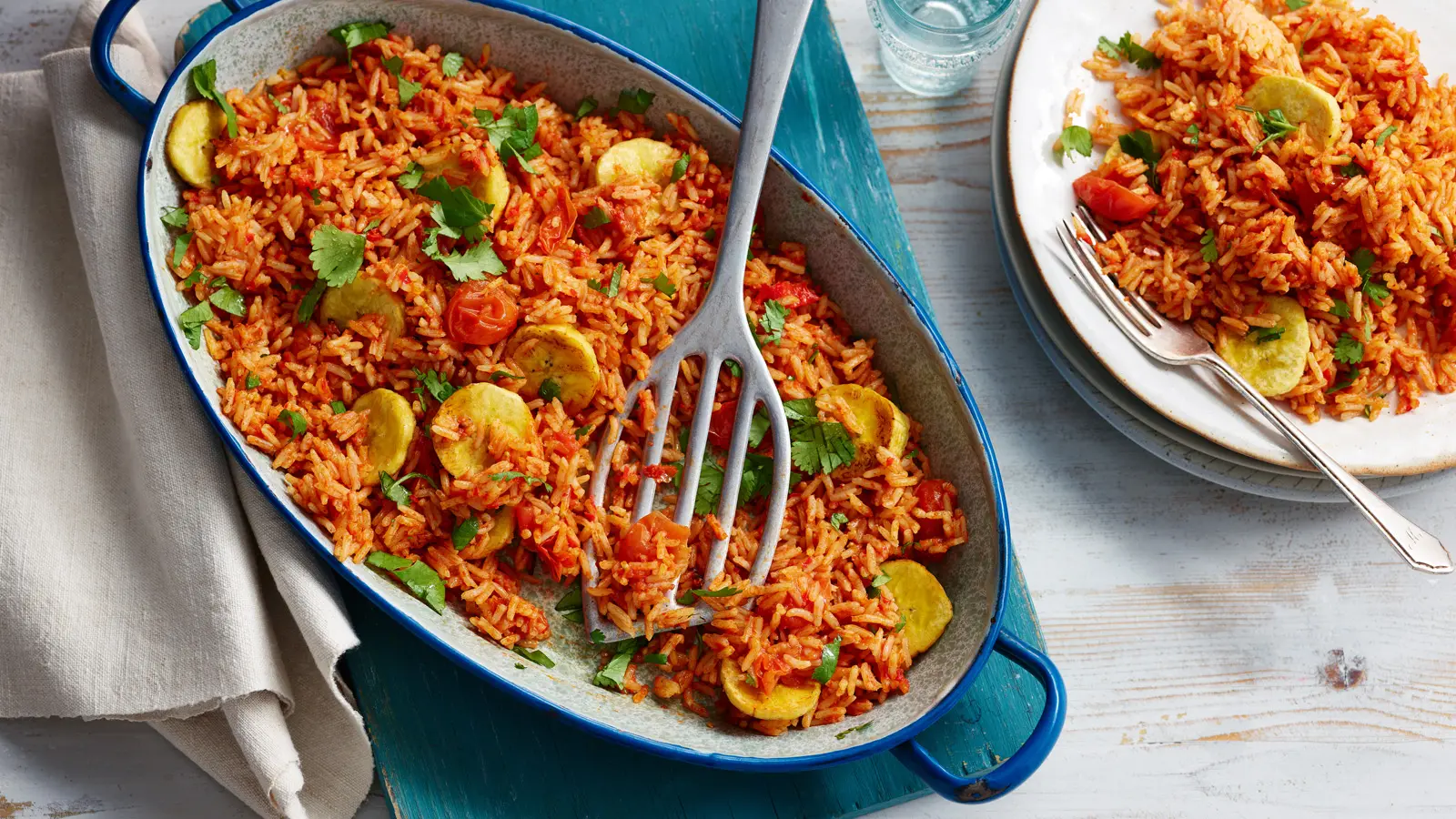
Jollof Rice is more than just a dish—it is a cultural treasure and a beloved staple across West Africa. Often considered the heart of celebrations, Jollof Rice is present at weddings, birthdays, family gatherings, and festivals, bringing people together over its rich, comforting flavors. Its striking red-orange color, fragrant aroma, and perfectly spiced taste make it instantly recognizable and unforgettable. While every country—Nigeria, Ghana, Senegal, and others—claims to have the “best” version of Jollof Rice, one thing is certain: it is a dish that represents love, community, and pride.
The origins of Jollof Rice are believed to trace back to the Senegambian region, particularly the Wolof people, from which the dish derives its name. From there, it spread across West Africa, adapting to local ingredients and preferences. Each region has its own twist: some prefer basmati rice while others stick to long-grain parboiled rice, some add lots of vegetables while others focus more on the depth of spices. Despite these differences, the essence of Jollof Rice remains the same—a tomato-based rice dish cooked with spices and sometimes enriched with meat, chicken, or fish.
One of the joys of cooking Jollof Rice is its versatility. It can be the star of the table on its own or paired with fried plantains, grilled chicken, beef, or seafood. Vegetarian versions are equally delightful, with colorful vegetables like bell peppers, peas, and carrots adding both nutrition and beauty to the plate. The combination of rice, tomato paste, fresh tomatoes, onions, garlic, and spices creates a deep, smoky flavor that lingers in memory long after the meal is done.
Over the years, Jollof Rice has gained international recognition, making appearances in global food festivals, restaurants, and even culinary competitions. The famous “Jollof Wars” between Nigeria and Ghana about whose recipe reigns supreme highlight how beloved and iconic this dish is. No matter the variation, Jollof Rice is a symbol of home, comfort, and joy for millions of people worldwide.
Jollof Rice Ingredients
Serves: 5 people
- Long-grain parboiled rice – 3 cups (washed and drained)
- Fresh tomatoes – 4 large (blended into puree)
- Tomato paste – 3 tbsp
- Red bell peppers – 2 (blended with tomatoes)
- Scotch bonnet or chili peppers – 2 (adjust for spice level)
- Onions – 2 large (1 blended, 1 sliced)
- Garlic – 4 cloves
- Ginger – 1-inch piece
- Vegetable or chicken stock – 4 cups
- Oil – ½ cup (vegetable or sunflower oil)
- Bay leaves – 2
- Thyme – 1 tsp
- Curry powder – 1 tsp
- Salt – 1½ tsp
- Black pepper – ½ tsp
- Butter – 2 tbsp (optional, for richness)
Steps
- Blend fresh tomatoes, bell peppers, scotch bonnets, garlic, ginger, and one onion into a smooth puree.
- Heat oil in a large pot and sauté the sliced onion until golden.
- Add tomato paste and fry for a few minutes to remove its raw taste.
- Pour in the blended tomato mixture and cook on medium heat until it thickens and the oil begins to separate from the sauce.
- Season the sauce with thyme, curry powder, bay leaves, salt, and pepper. Stir well.
- Add the rice to the pot, stirring to coat each grain with the tomato sauce.
- Pour in stock, reduce the heat to low, and cover the pot with a tight-fitting lid. Allow the rice to steam gently.
- Stir occasionally to prevent burning and add a splash of water or stock if needed.
- Once the rice is tender and has absorbed the sauce, add butter for extra richness.
- Fluff with a fork and serve hot with fried plantains, chicken, or salad.
Health Benefits
Jollof Rice is not just flavorful but also nutritious when prepared with wholesome ingredients. Tomatoes provide vitamin C and lycopene, powerful antioxidants that support immunity and heart health. Rice is an excellent source of energy, while the addition of bell peppers and onions adds vitamins A and B6, supporting vision and metabolism. Using vegetable stock and reducing oil makes this dish a healthier option without compromising taste. Pairing it with protein like chicken, fish, or beans creates a balanced meal.
Kitchen Tip: To achieve the signature smoky flavor often associated with party-style Jollof Rice, allow the rice to cook slowly on low heat, letting the bottom slightly caramelize without burning.