
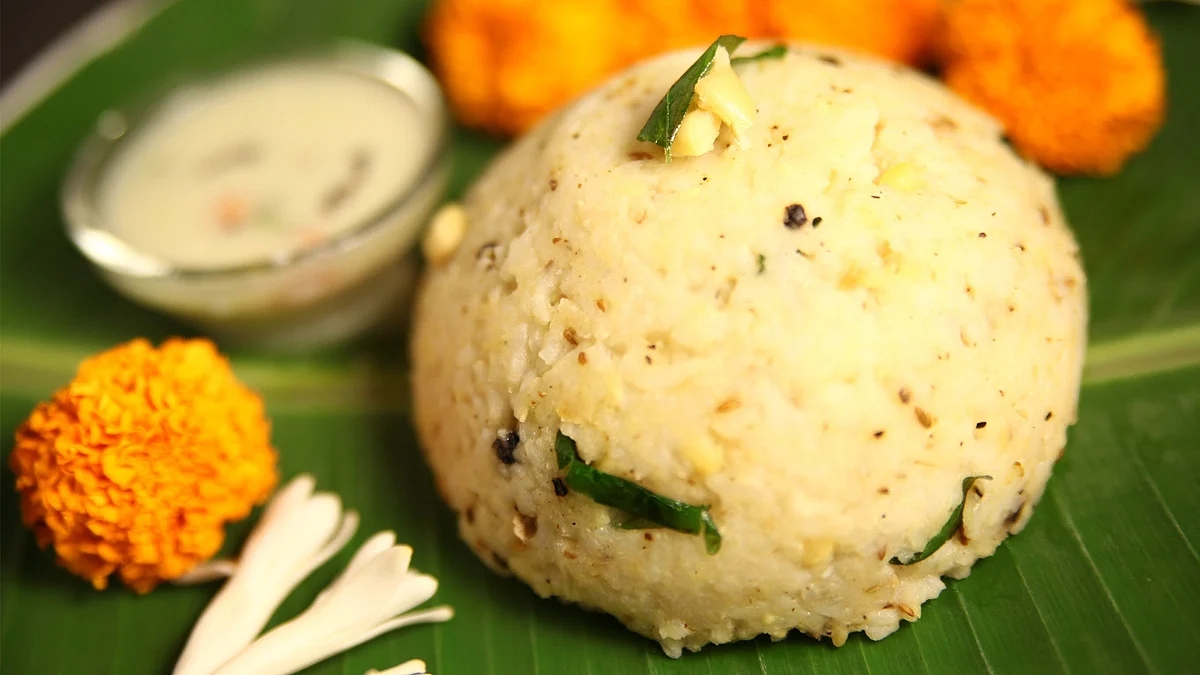
Pongal is one of the most iconic South Indian dishes, celebrated not only for its taste but also for its deep cultural significance. It is a warm, wholesome preparation made with rice and moong dal, flavored with ghee, black pepper, ginger, and curry leaves. Pongal is often prepared during the harvest festival of the same name, particularly in Tamil Nadu, where it is offered to the Sun God as a symbol of gratitude for a bountiful harvest. Beyond its festive associations, Pongal has become a staple breakfast dish across South India, loved for its soothing flavor and nourishing qualities.
The history of Pongal goes back several centuries, rooted in Tamil traditions. The dish itself is closely tied to the Pongal festival, which marks the beginning of the Tamil month of Thai (January–February) and signifies prosperity, renewal, and thanksgiving. Traditionally, families cook Pongal in new earthen pots as part of the festival rituals, letting the mixture of rice and milk boil over to symbolize abundance.
Over time, this ritual dish became popular as a daily food, especially in its savory form known as Ven Pongal, which is commonly eaten in homes and served in temples and restaurants. Sweet variations, such as Sakkarai Pongal made with jaggery and ghee, are also widely enjoyed during festive occasions. Pongal’s popularity is tied to its simplicity and comfort. In South Indian households, ven pongal is considered one of the most satisfying breakfasts, often served with coconut chutney and sambar.
Its soft, porridge-like texture makes it easy to digest, which is why it is also given to children and elders. Street food vendors, temples, and eateries across Tamil Nadu, Karnataka, and Andhra Pradesh serve steaming plates of pongal, often garnished with cashews fried in ghee for extra richness. This dish has also found its way into modern kitchens worldwide, as Indian cuisine gains international recognition for its variety and nutrition.
Another reason Pongal continues to be beloved is its adaptability. While the traditional recipe is prepared with rice and moong dal, some modern variations use millets, oats, or quinoa for a healthier twist. Vegetables like carrots, beans, or spinach can be added to make it more colorful and nutritious. Despite these modern versions, the authentic, ghee-laden pongal with a kick of black pepper remains the ultimate comfort food for many.
Pongal Ingredients
Serves: 4 people
- Raw rice – 1 cup
- Moong dal (yellow split lentils) – ½ cup
- Water – 4 cups
- Milk – 1 cup (optional, for richness)
- Ghee – 4 tbsp
- Cumin seeds – 1 tsp
- Whole black pepper – 1 tsp (lightly crushed)
- Ginger – 1 tsp (finely chopped)
- Curry leaves – 8–10
- Green chili – 1 (slit)
- Cashew nuts – 10 (halved)
- Salt – to taste
Steps
- Wash the rice and moong dal thoroughly, then drain.
- In a pressure cooker, add the rice, moong dal, water, and milk. Pressure cook for 4–5 whistles until the mixture becomes soft and mushy.
- Once the pressure releases, open the cooker and mash the rice-dal mixture slightly to get a creamy texture.
- In a small pan, heat ghee and add cumin seeds. Let them splutter.
- Add cashew nuts and fry until golden brown.
- Stir in curry leaves, green chili, chopped ginger, and black pepper, sautéing until aromatic.
- Pour this tempering over the cooked rice-dal mixture and stir well.
- Add salt to taste and mix everything thoroughly.
- Serve hot with coconut chutney, sambar, or a drizzle of extra ghee.
Health Benefits
Pongal is more than just a comfort food; it is also highly nutritious. The combination of rice and moong dal provides a balance of carbohydrates and proteins, offering sustained energy and satiety. Moong dal is light on the stomach and packed with essential nutrients such as iron, magnesium, and potassium. The use of ghee in moderation adds healthy fats that support brain function and enhance the absorption of fat-soluble vitamins. Black pepper and ginger not only add flavor but also aid digestion and improve metabolism. Together, these ingredients make pongal a wholesome, balanced meal suitable for people of all ages.
Kitchen Tip: For a richer and creamier pongal, replace half the water with milk while cooking, and always add the tempering just before serving for the freshest flavor.