
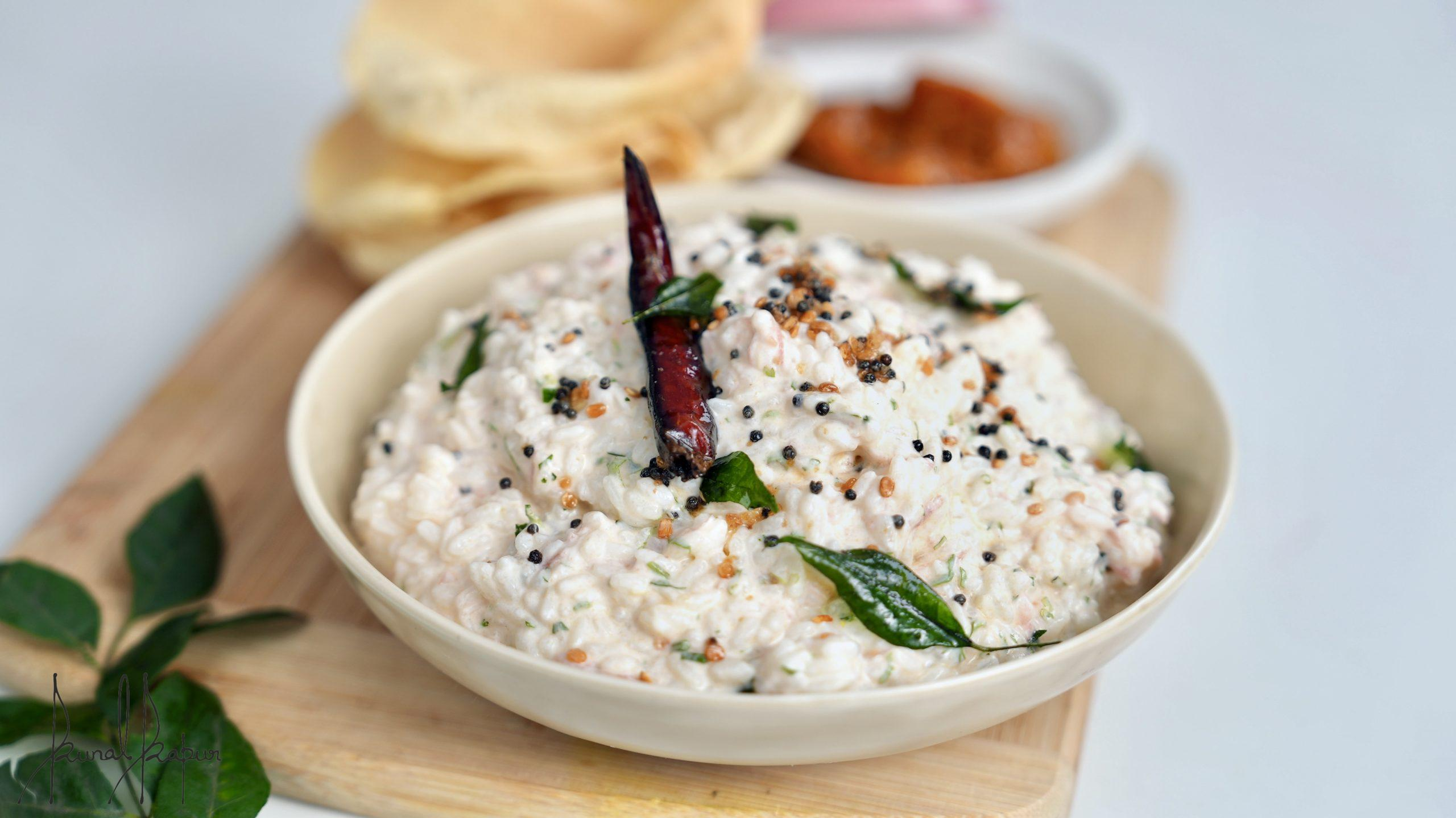
Curd Rice, also known as Thayir Sadam in Tamil Nadu and Daddojanam in Andhra Pradesh, is one of the most beloved dishes from South India. This simple yet flavorful dish combines soft-cooked rice with fresh curd (yogurt), seasoned with a tempering of spices, curry leaves, and green chilies. It is often enjoyed as the final course in a traditional South Indian meal, bringing a refreshing and cooling finish. Known for its creamy texture and mild tanginess, curd rice is more than just a dish—it’s comfort food in its truest form.
The origins of curd rice are deeply rooted in the culinary traditions of South India, where yogurt and rice have been staples for centuries. Ancient texts and cultural practices describe rice mixed with curd as both a daily meal and an offering in temples. The dish reflects the agrarian lifestyle of the region, where rice was abundant, and curd served as a natural coolant in hot climates. Over time, the addition of tempering with mustard seeds, curry leaves, and chilies gave the dish a distinctive flavor and made it a cherished part of South Indian thalis.
Curd rice is more than just a simple preparation; it carries emotional and cultural significance. For many South Indians, it is a dish that represents home, comfort, and nostalgia. It is often packed in lunch boxes, served at festive gatherings, and offered as prasadam in temples. Its cooling properties make it especially popular during the hot summer months, while its lightness ensures it is suitable for people of all ages, including children and the elderly. The dish has also gained popularity outside South India, becoming a favorite among food lovers seeking wholesome, fuss-free meals.
Today, curd rice has found its way into kitchens across India and even abroad, thanks to its simplicity and adaptability. Some households enrich it with pomegranate seeds, grated carrots, or cucumbers for added freshness and color, while others keep it traditional and minimal. Whether paired with spicy pickles, papad, or a drizzle of ghee, curd rice always delivers a satisfying experience that balances health, taste, and tradition.
Ingredients
Serves: 3–4 people
- Cooked rice – 2 cups (soft and slightly mushy)
- Fresh curd (yogurt) – 1 ½ cups
- Milk – ½ cup (to adjust consistency)
- Salt – 1 tsp (or to taste)
- Green chilies – 2 (finely chopped)
- Ginger – 1 tsp (grated)
- Curry leaves – 8–10
- Mustard seeds – 1 tsp
- Urad dal (split black gram) – 1 tsp
- Dry red chili – 1 (broken)
- Asafoetida – ¼ tsp
- Oil – 1 tbsp
- Fresh coriander leaves – 2 tbsp (chopped, for garnish)
- Pomegranate seeds – 2 tbsp (optional, for garnish)
Steps
- Cook the rice until soft and slightly mushy. Let it cool to room temperature.
- Whisk curd and milk together until smooth.
- Mix the cooled rice with curd and milk, ensuring a creamy consistency. Add salt and stir well.
- Heat oil in a small pan. Add mustard seeds and let them splutter.
- Add urad dal, curry leaves, green chilies, ginger, dry red chili, and asafoetida. Sauté for a few seconds.
- Pour this tempering over the curd rice and mix gently.
- Garnish with coriander leaves and pomegranate seeds if using.
- Serve immediately with pickle, papad, or a side of vegetable curry.
Health Benefits
Curd rice is not only light and delicious but also packed with health benefits. Curd is a natural probiotic that promotes gut health and digestion, while rice provides energy and is easy to digest. The addition of curry leaves, ginger, and chilies in the tempering aids metabolism and adds antioxidants. Cooling in nature, curd rice helps regulate body heat, making it especially beneficial in hot climates. It is a complete meal that soothes the stomach and keeps you nourished without being heavy.
Kitchen Tip: To prevent curd rice from turning sour, use fresh curd and add a little milk if preparing it ahead of time.