
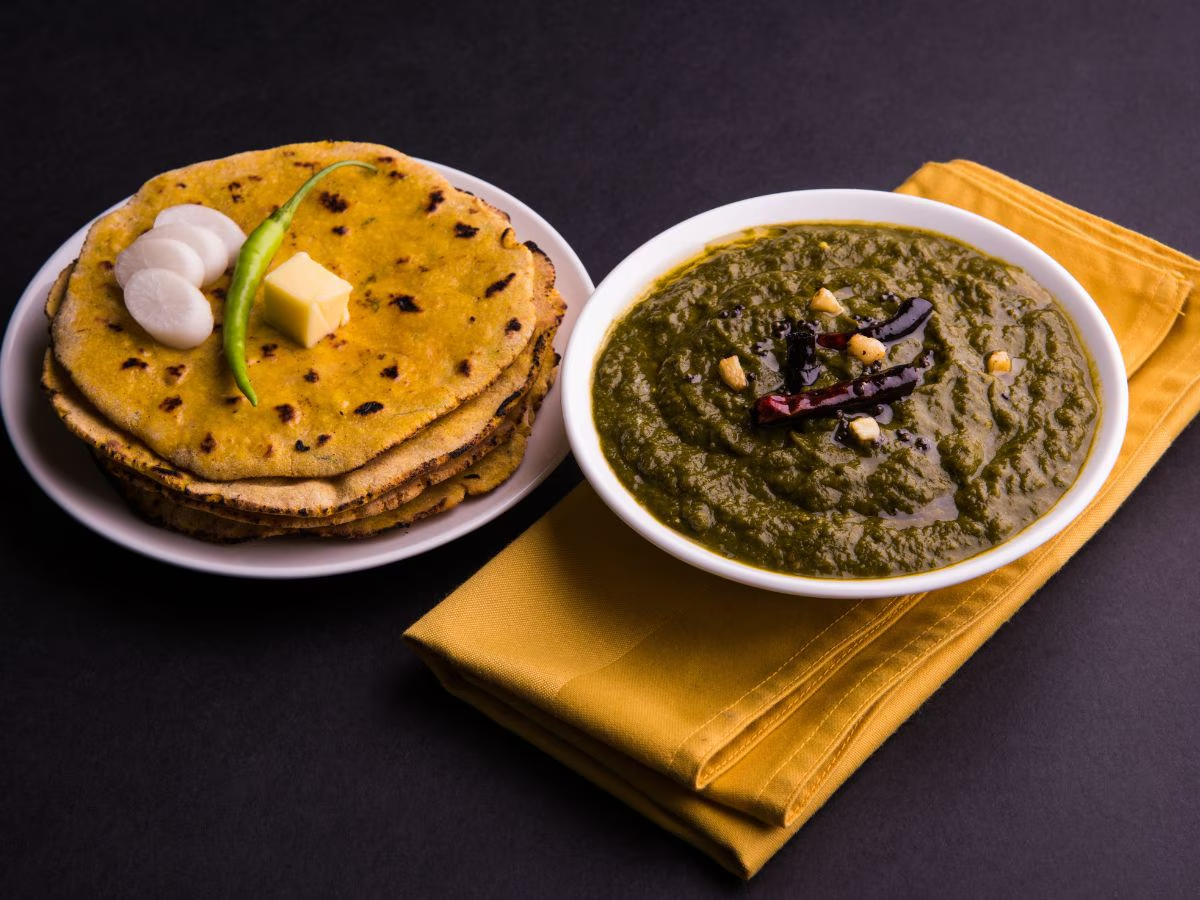
Sarson da Saag with Makki di Roti is one of the most iconic and soul-satisfying combinations in Punjabi cuisine, celebrated for its rich taste, cultural heritage, and hearty nature. This duo has been a staple of North Indian households for centuries, especially during the winter season when mustard greens are fresh and abundant. The creamy, earthy saag made with mustard leaves, spinach, and bathua (goosefoot leaves) is perfectly balanced by the rustic cornmeal flatbread, or makki di roti, creating a wholesome meal that embodies the warmth of Punjabi kitchens.
The history of Sarson da Saag traces back to rural Punjab, where farmers would harvest mustard greens in winter and cook them slowly with seasonal vegetables, herbs, and spices. The dish reflects the agrarian roots of Punjabi culture, as it made use of what the land offered during the colder months. Paired with makki di roti, which is made from cornmeal and is naturally warming, this meal became both a source of nourishment and comfort. Over time, this traditional food became synonymous with Punjabi identity and is now enjoyed across India and in Punjabi communities worldwide.
What makes this combination truly special is not just the taste but the sentiment attached to it. Sarson da Saag is often served with a dollop of homemade white butter or ghee, which enhances its richness, while makki di roti is cooked on a hot tawa and eaten fresh, hot, and crisp. The rustic, grainy texture of the roti complements the smooth, creamy saag, creating a perfect balance. Together, they symbolize hospitality, tradition, and the deep connection between food and culture in Punjab.
Today, Sarson da Saag and Makki di Roti are celebrated beyond homes and are often featured in restaurants that serve authentic Punjabi thalis. They are especially popular during Lohri and Makar Sankranti festivals, adding festive cheer to family meals. While the cooking process requires patience, as the greens are slow-cooked to perfection, the result is an irresistibly flavorful dish that captures the essence of Punjabi tradition.
Ingredients
Serves: 4 people
For Sarson da Saag
- Mustard greens (sarson) – 500 g
- Spinach (palak) – 250 g
- Bathua leaves – 250 g (optional but traditional)
- Onion – 2 medium (chopped)
- Tomato – 2 medium (chopped)
- Ginger – 1 tbsp (grated)
- Garlic – 5–6 cloves
- Green chilies – 2–3 (chopped)
- Makki ka atta (cornmeal) – 2 tbsp (for thickening)
- Ghee – 3 tbsp
- Salt – 1 tsp (or to taste)
- Red chili powder – 1 tsp
- Turmeric powder – ½ tsp
- Water – 2–3 cups
For Makki di Roti
- Makki ka atta (cornmeal) – 2 cups
- Warm water – as required (for kneading)
- Salt – ½ tsp
- Ghee or butter – for brushing
Steps
Preparing Sarson da Saag
- Wash and clean mustard greens, spinach, and bathua thoroughly, then chop roughly.
- In a deep pot, add the chopped greens with water, turmeric, and a little salt. Cook on medium heat until soft.
- Blend the cooked greens into a coarse paste using a hand blender.
- Heat ghee in a pan, add ginger, garlic, and green chilies, sauté until fragrant.
- Add chopped onions and tomatoes, cook until soft and pulpy.
- Add the blended greens into the pan, stir well, and cook on low heat for 20–30 minutes.
- Mix in 2 tablespoons of cornmeal to thicken the saag and simmer further.
- Finish with a dollop of ghee before serving.
Preparing Makki di Roti
- In a bowl, mix cornmeal with salt and warm water to form a soft dough.
- Divide into equal portions and flatten each portion between palms or using a rolling pin (with care, as cornmeal is delicate).
- Heat a tawa and cook each roti on medium heat until golden spots appear on both sides.
- Brush with ghee or butter before serving.
Health Benefits
Sarson da Saag with Makki di Roti is not just delicious but also highly nutritious. Mustard greens are packed with iron, calcium, and vitamins A, C, and K, supporting immunity and bone health. Spinach and bathua add antioxidants and fiber, making the dish great for digestion and overall wellness. The use of ghee in moderation provides healthy fats, while cornmeal is gluten-free and high in complex carbohydrates, offering sustained energy. Together, they make a warming, balanced meal perfect for cold winter days.
Kitchen Tip: Add a small cube of jaggery while simmering the saag to balance flavors and enhance the earthy taste.