
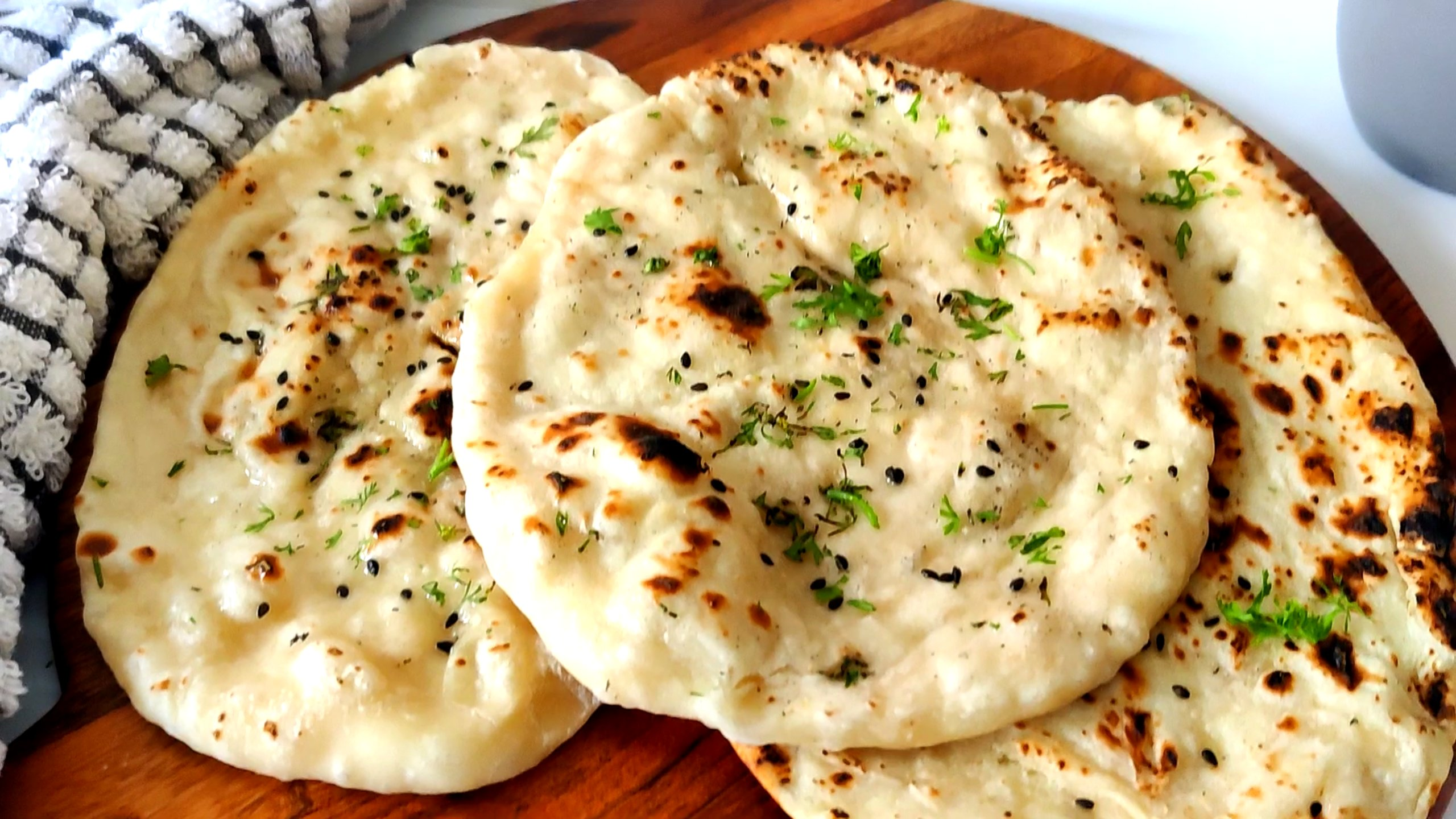
Naan is one of the most loved and versatile Indian flatbreads, often enjoyed with rich curries, grilled meats, or even on its own with a touch of butter. With its soft and pillowy texture, slight charred spots, and subtle buttery flavor, naan has earned a permanent spot in both traditional Indian cuisine and modern international dining. Unlike simple rotis or chapatis, naan is leavened, which gives it a light and airy bite, and it is traditionally cooked in a clay tandoor oven that imparts a smoky flavor and beautiful texture.
The origins of this dish go back hundreds of years to the Indian subcontinent, where it was influenced by Persian and Central Asian cooking techniques. Historical references to naan appear in the Mughal era, when it was considered a delicacy served in royal kitchens. The name itself comes from the Persian word for bread, and through centuries of trade and migration, this dish became a staple not only in India but also across South and Central Asia.
Over time, the bread evolved with regional variations—some brushed with ghee, others stuffed with garlic, cheese, or even spiced meat. Today, this dish is not just confined to Indian restaurants but is also enjoyed worldwide as a perfect companion to both traditional and fusion meals. Naan’s popularity lies in its adaptability and the warmth it brings to a meal.
It can be used to scoop up thick gravies like butter chicken or paneer tikka masala, paired with lentil dishes like dal makhani, or served with kebabs for a wholesome combination. In many homes, this dish has become a weekend treat, while in restaurants, it is a highlight of the menu, often customized with creative toppings such as chili, herbs, or even sweet variations. The appeal of naan extends globally because it strikes the perfect balance of comfort food and gourmet dining.
Beyond taste, this dish also represents culinary tradition and togetherness. Sharing freshly baked naan at the table connects people, making it not just food but a cultural experience. Even though tandoor cooking is not always possible at home, naan can easily be recreated on a stovetop or in an oven, ensuring that anyone can enjoy its irresistible flavors. With just a few ingredients and some simple steps, this timeless bread becomes a homemade delight.
Ingredients
Serves: 6–8 naans
- All-purpose flour – 3 cups
- Yogurt – ½ cup (plain, unsweetened)
- Warm water – ¾ cup (adjust as needed)
- Instant yeast – 2 tsp
- Sugar – 1 tsp
- Salt – 1 tsp
- Baking powder – ½ tsp
- Ghee or butter – 3 tbsp (for brushing)
- Garlic (optional) – 2 tbsp finely chopped (for garlic naan)
- Fresh coriander leaves – 2 tbsp (chopped, optional garnish)
Steps
- In a bowl, mix warm water, yeast, and sugar. Let it sit for 10 minutes until frothy.
- In a large mixing bowl, combine flour, salt, and baking powder. Add yogurt and yeast mixture.
- Knead the dough for 8–10 minutes until smooth and soft, adding more water if required.
- Cover the dough with a damp cloth and let it rise for 1–2 hours until it doubles in size.
- Divide the dough into equal portions and roll each into a ball.
- On a floured surface, roll out each ball into an oval or round shape.
- Heat a skillet or tawa on high heat. Place the naan on the hot skillet and cook until bubbles appear.
- Flip and cook the other side until golden brown spots form. For a smoky flavor, place the naan directly over the flame for a few seconds.
- Brush hot naan with ghee or butter and sprinkle with garlic or coriander if desired.
- Serve warm with curries, dals, or kebabs.
Health Benefits
Though naan is indulgent, it can also provide nutritional value when prepared mindfully. The yogurt in the dough adds protein and probiotics, while whole wheat flour can be substituted for a healthier, fiber-rich option. Homemade naan allows you to control the use of ghee or butter, making it lighter than restaurant versions. Paired with lentils, vegetables, or lean proteins, naan contributes to a balanced meal that is both satisfying and wholesome.
Kitchen Tip: For softer naan, add a little milk while kneading the dough, and always keep it covered with a cloth to prevent drying out.