
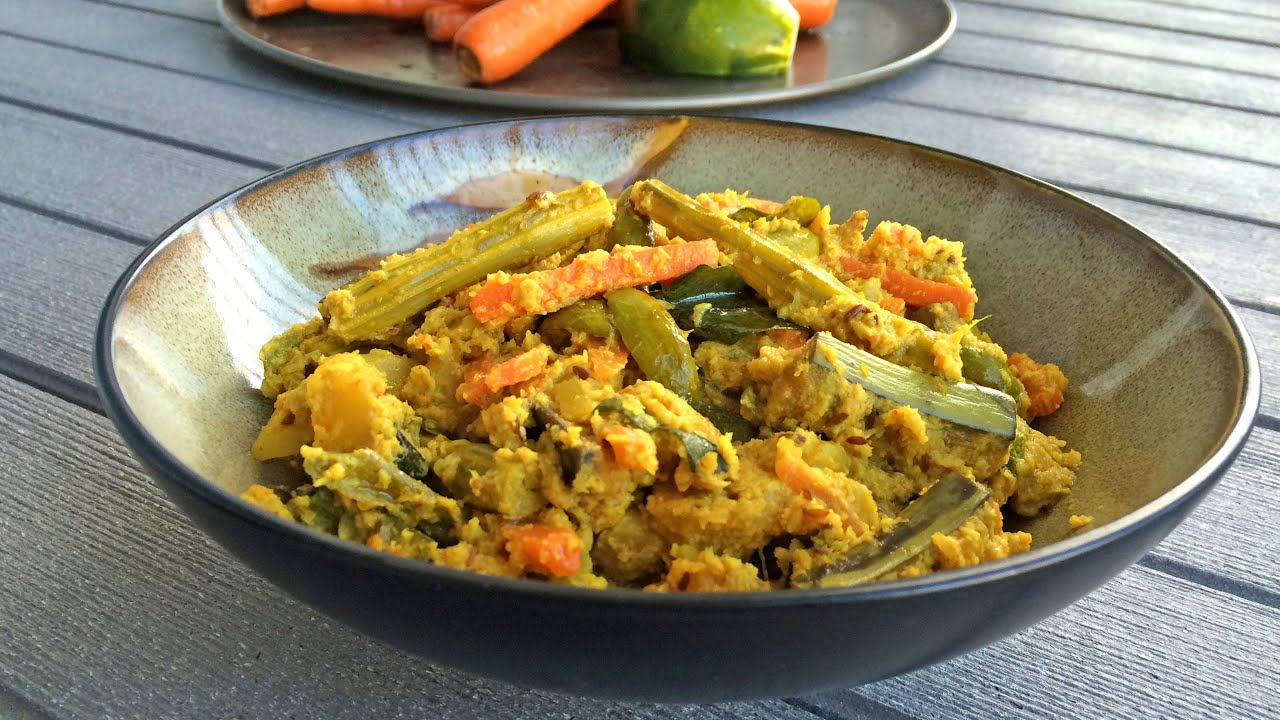
Avial is one of the most iconic and celebrated dishes from Kerala, deeply rooted in South Indian culinary traditions. Known for its medley of vegetables cooked in a coconut-based gravy and flavored with curry leaves and coconut oil, Avial is a dish that perfectly balances health, flavor, and heritage. Served traditionally with rice, it is an integral part of the Kerala Sadya, the grand vegetarian feast prepared during festivals like Onam and Vishu. The combination of tender vegetables, ground coconut, and yogurt gives Avial its distinct texture and taste, making it both nourishing and satisfying.
The history of Avial is as fascinating as its flavor. Folklore attributes its invention to Bhima, one of the Pandavas from the Mahabharata. During exile, Bhima is said to have prepared Avial by mixing all the available vegetables with coconut and yogurt, creating a wholesome and hearty dish. Over time, this legendary preparation became a staple in Kerala, Tamil Nadu, and parts of Karnataka. Avial is often considered more than just food—it represents resourcefulness, sustainability, and tradition, as it uses seasonal vegetables in a simple yet flavorful way.
What makes Avial unique is its versatility and ability to highlight the natural taste of vegetables without overpowering spices. The dish usually includes a variety of vegetables such as drumsticks, raw bananas, ash gourd, beans, carrots, and snake gourd, all cut lengthwise for uniformity. The coconut paste, combined with yogurt and tempered with curry leaves in coconut oil, gives Avial its signature aroma and flavor. This blend of earthy vegetables and creamy coconut makes it a comfort dish for many households in South India.
Avial is also a dish that reflects the communal and festive spirit of Kerala cuisine. No Sadya (traditional feast) is complete without it, and it often occupies a place of pride on the banana leaf along with other classics like sambar, thoran, and pachadi. Its light yet wholesome nature makes it suitable for both daily meals and special occasions. Beyond its traditional setting, Avial has gained recognition worldwide for its simple preparation and health benefits, appealing to those who love plant-based, nutrient-rich meals.
Ingredients
Serves: 4 people
- Raw banana – 1 (cut lengthwise)
- Drumsticks – 2 (cut into 2-inch pieces)
- Carrot – 1 (cut lengthwise)
- Beans – 100 g (cut into strips)
- Ash gourd – 200 g (cut into strips)
- Snake gourd – 100 g (cut into strips)
- Cucumber – 100 g (optional, cut lengthwise)
- Fresh grated coconut – 1 cup
- Green chilies – 3–4
- Cumin seeds – 1 tsp
- Yogurt – ½ cup (whisked)
- Curry leaves – 10–12
- Turmeric powder – ½ tsp
- Coconut oil – 3 tbsp
- Salt – 1 tsp (or to taste)
- Water – 2–3 cups
Steps
- Wash, peel, and cut all the vegetables lengthwise into medium-sized strips.
- In a deep pan, add vegetables, turmeric, salt, and water. Cook until vegetables are tender but not mushy.
- Grind grated coconut, green chilies, and cumin seeds into a coarse paste with a little water.
- Add the coconut paste to the cooked vegetables and simmer on low flame for 5–7 minutes.
- Remove the pan from heat and let it cool slightly before adding the whisked yogurt. Mix gently.
- Drizzle coconut oil on top and add fresh curry leaves for the final touch.
- Serve Avial warm with steamed rice as part of a traditional meal or with adai (lentil dosa).
Health Benefits
Avial is a powerhouse of nutrition thanks to its wide variety of vegetables, which provide vitamins, minerals, and fiber essential for good health. The coconut and yogurt base offers healthy fats, probiotics, and antioxidants that aid digestion and boost immunity. The dish is low in oil and free from heavy spices, making it suitable for people of all ages. With its balance of carbohydrates, proteins, and fats, Avial makes for a wholesome and complete vegetarian meal.
Kitchen Tip: For authentic flavor, always finish Avial with raw coconut oil and fresh curry leaves after cooking rather than during the cooking process.