
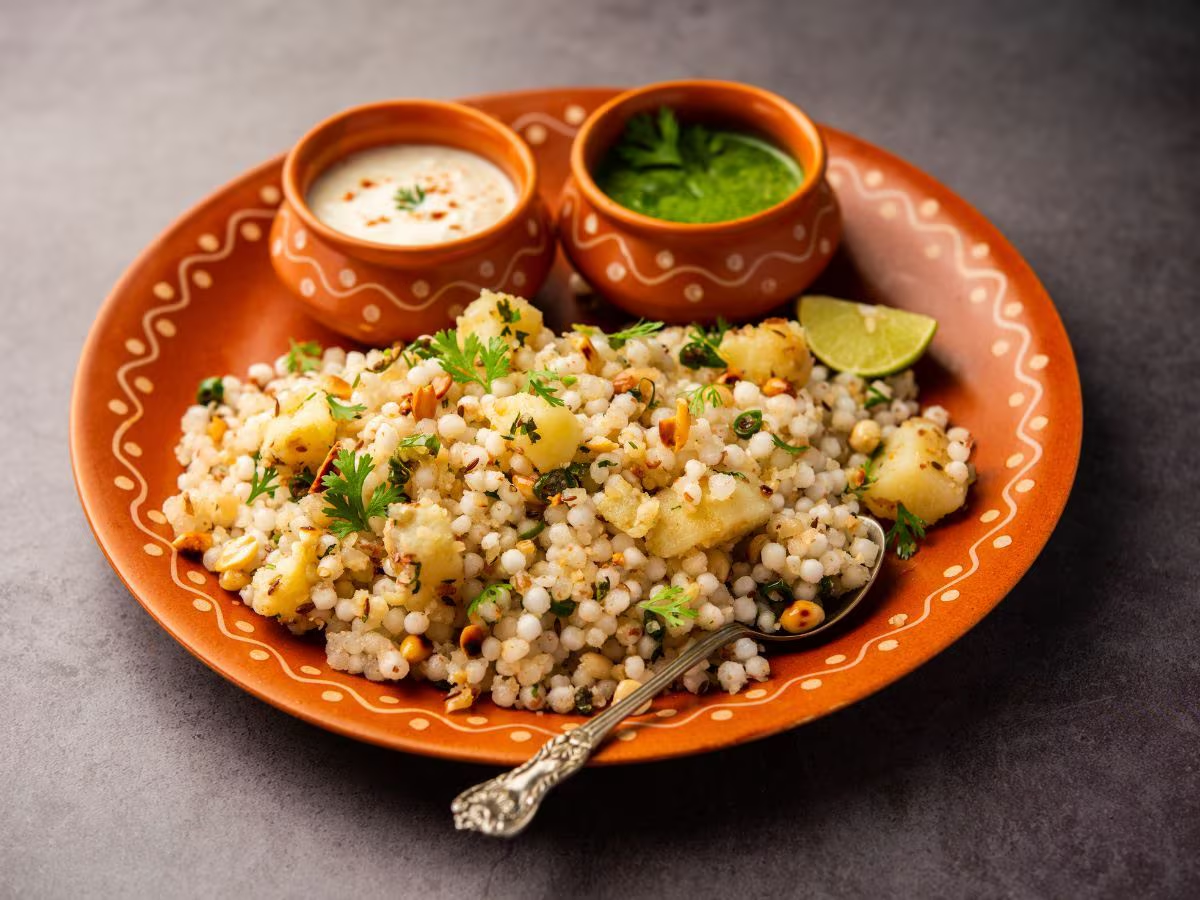
Sabudana khichdi is one of the most cherished dishes in Indian households, especially during fasting days like Navratri, Ekadashi, or Shivratri. Made from soaked tapioca pearls (sabudana), this dish is light, flavorful, and easy to digest, yet filling enough to keep energy levels steady throughout the day. What makes sabudana khichdi so special is its unique chewy texture and the nutty taste imparted by roasted peanuts, along with the mild warmth of green chilies and cumin. It has become a comfort food beyond just fasting occasions, often prepared as a quick breakfast or snack in many homes.
The origins of sabudana lie in South America, where tapioca is derived from the cassava root. Introduced to India during the colonial era, sabudana soon found its way into regional cuisines. In Maharashtra and Gujarat, it became particularly popular as a fasting food, as it is considered “phalahar” (permissible during fasts). Over time, sabudana khichdi has evolved from a religious ritual dish into an everyday recipe enjoyed for its lightness and taste. The dish holds cultural significance, symbolizing a blend of tradition, nourishment, and comfort. Its simplicity and adaptability have made it a favorite across India, from urban kitchens to small towns.
One of the reasons sabudana khichdi remains popular is its ability to be both wholesome and flavorful with just a handful of ingredients. The key lies in soaking the sabudana correctly to achieve that perfect non-sticky texture. Every household has its own way of making it—some like it with more chilies for a spicy kick, while others keep it mild and subtle. The addition of potatoes makes it more filling, and garnishing with fresh coriander and a squeeze of lemon adds freshness to every bite. It’s a dish that proves simplicity can be immensely satisfying.
Apart from being associated with fasting, sabudana khichdi has made its way into modern food culture as a light and gluten-free dish. Health-conscious individuals embrace it for its energy-boosting properties, while families continue to value it as a dish that brings comfort and tradition to the table. Whether served with plain yogurt, sweetened curd, or simply on its own, sabudana khichdi never fails to delight.
Sabudana Khichdi Ingredients
Serves: 2–3 people
- Sabudana (tapioca pearls) – 1 cup
- Potatoes – 2 medium (boiled and diced)
- Peanuts – ½ cup (roasted and coarsely ground)
- Green chilies – 2 (finely chopped)
- Cumin seeds – 1 tsp
- Ghee or oil – 2 tbsp
- Curry leaves – 6–8 (optional)
- Salt – 1 tsp (or rock salt if making for fasting)
- Lemon juice – 1 tbsp
- Fresh coriander leaves – 2 tbsp (chopped)
Steps
- Rinse the sabudana thoroughly 2–3 times until the water runs clear to remove excess starch.
- Soak the sabudana in just enough water to cover them and let it rest for 4–6 hours or overnight until they turn soft and fluffy.
- Heat ghee or oil in a pan and add cumin seeds. Let them splutter.
- Add green chilies and curry leaves, sauté for a few seconds.
- Add the boiled, diced potatoes and stir-fry for 2–3 minutes until lightly golden.
- Mix in the soaked sabudana and roasted peanut powder, stirring gently to avoid mashing the pearls.
- Season with salt and cook on low heat for 5–7 minutes, stirring occasionally, until the sabudana turns translucent and cooked through.
- Turn off the heat, drizzle lemon juice, and garnish with fresh coriander.
- Serve hot with plain yogurt or sweetened curd for a complete meal.
Health Benefits
Sabudana khichdi is a great source of quick energy, which is why it is a staple during fasting. Tapioca pearls are rich in carbohydrates, making them excellent for replenishing strength. Peanuts add protein and healthy fats, while potatoes provide extra fiber and satiety. Curry leaves and green chilies aid digestion, and lemon juice offers a refreshing dose of vitamin C. Since sabudana is naturally gluten-free, this dish is suitable for those with gluten sensitivities. While it is not a high-protein dish on its own, pairing it with yogurt or buttermilk enhances its nutritional value, creating a balanced meal.
Kitchen Tip: To avoid sticky sabudana, ensure you soak them in minimal water and let them rest until all moisture is absorbed before cooking.