
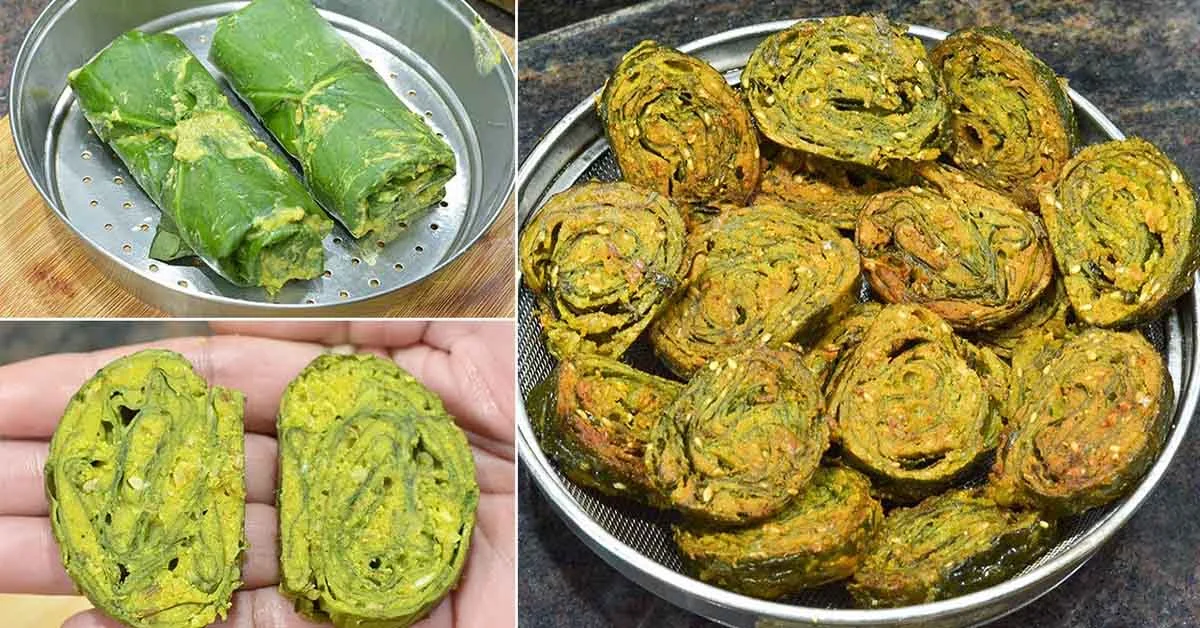
Patra, also known as Alu Vadi in Maharashtra, is one of the most iconic and much-loved snacks from the western state of Gujarat. It is made using colocasia leaves (arbi ke patte), which are coated with a spiced gram flour paste, rolled tightly, steamed, and then tempered with aromatic spices. The unique blend of tangy, sweet, and spicy flavors in every bite makes patra stand out among Indian snacks. What truly makes it special is the combination of health benefits and taste, as it uses leafy greens and chickpea flour, offering both nutrition and satisfaction.
This dish has its roots deep in traditional Gujarati households, where seasonal vegetables and leafy greens were creatively turned into wholesome dishes. The practice of rolling leaves with masalas is not only unique but also a beautiful example of how Indian regional cuisines make the best use of local ingredients. The art of making patra requires patience and skill — spreading the besan paste evenly, rolling the delicate colocasia leaves without tearing them, and steaming them to perfection before the final tempering. Families often prepare it in large batches and enjoy it with tea or as part of a festive spread, which highlights its importance in community meals and celebrations.
Patra also carries cultural significance as it is often prepared during festivals and traditional occasions. The snack is not just about satisfying hunger but about creating a shared experience. When freshly made, the kitchen fills with the aroma of steaming leaves and spices, and the anticipation of cutting into the rolls to reveal beautifully layered spirals makes it a visual treat as well. This beautiful presentation is one of the reasons why patra is often served to guests as a symbol of hospitality and care. In many Gujarati thalis, you will find a few slices of patra alongside farsan and pickles, adding balance and variety to the meal.
Over time, patra has traveled beyond Gujarat and Maharashtra, finding fans across India and even abroad. With more people seeking healthier snacking options, patra stands out as a guilt-free yet indulgent choice. It can be eaten plain, with chutneys, or even lightly fried for an extra crispy version. Restaurants and Indian eateries serving authentic Gujarati food almost always include patra on their menu, showcasing its enduring popularity. Its adaptability makes it suitable for modern kitchens as well, where people experiment by adding sesame seeds, grated coconut, or even jaggery in the tempering for enhanced flavor.
Ingredients
Serves: 4 people
- Colocasia (arbi) leaves – 10 to 12 medium-sized
- Gram flour (besan) – 2 cups
- Tamarind pulp – 2 tbsp
- Jaggery – 2 tbsp (grated)
- Red chili powder – 1 tsp
- Turmeric powder – ½ tsp
- Coriander powder – 1 tsp
- Cumin powder – 1 tsp
- Asafoetida – a pinch
- Salt – to taste
- Water – as needed
For tempering:
- Oil – 2 tbsp
- Mustard seeds – 1 tsp
- Sesame seeds – 1 tsp
- Curry leaves – 8–10
- Green chilies – 2 (slit)
- Fresh coriander leaves – 2 tbsp (chopped)
- Grated coconut – 2 tbsp (for garnish)
Steps
- Wash colocasia leaves thoroughly and pat them dry. Remove the thick veins gently with a knife.
- In a mixing bowl, prepare a smooth batter by combining gram flour, tamarind pulp, jaggery, red chili powder, turmeric, coriander, cumin, asafoetida, and salt. Add water gradually until you achieve a thick, spreadable paste.
- Place one colocasia leaf on a flat surface, glossy side down. Spread a thin layer of the spiced besan paste evenly over it.
- Place another leaf on top, repeat the process, and continue layering 4–5 leaves at a time.
- Fold the edges inward and roll the stack tightly into a log, securing it with a little extra batter to seal.
- Steam the rolls in a steamer or pressure cooker without the whistle for about 20–25 minutes until firm.
- Allow the rolls to cool completely, then cut them into ½-inch thick slices.
- For tempering, heat oil in a pan, add mustard seeds, sesame seeds, curry leaves, and green chilies. Once they splutter, add the patra slices and sauté lightly.
- Garnish with fresh coriander and grated coconut before serving.
Health Benefits
Patra is not only a treat for the taste buds but also a nutritious addition to your diet. Colocasia leaves are rich in dietary fiber, iron, and vitamin C, which help in boosting immunity and improving digestion. Gram flour provides plant-based protein, making the dish filling and energizing. The use of tamarind adds antioxidants and aids digestion, while sesame seeds and curry leaves used in tempering add healthy fats and essential minerals. Since patra is steamed, it retains nutrients and remains low in calories, making it a perfect healthy snack option for both adults and children.
Kitchen Tip: To make patra extra crispy, shallow-fry the steamed slices before tempering. This adds a delightful crunch without making them too oily.