
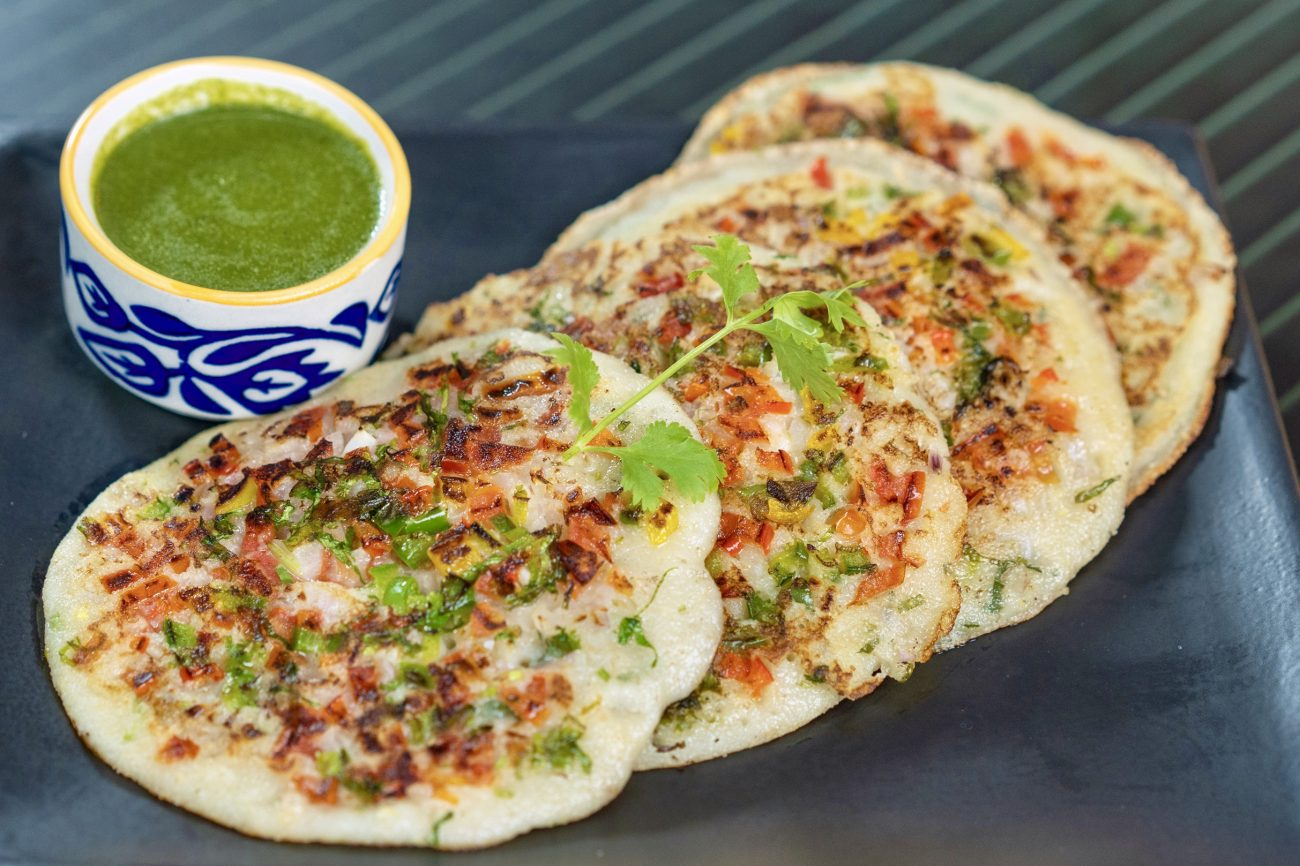
Uttapam is a beloved South Indian dish that beautifully combines the flavors of a pancake with the heartiness of a savory meal. Made from a fermented rice and lentil batter, this dish is thick, soft, and topped generously with vegetables, making it both nutritious and satisfying. Unlike dosas, which are thin and crisp, uttapam is soft and fluffy, with a delightful texture that holds toppings like onions, tomatoes, chilies, and coriander perfectly. Its appeal lies in its simplicity, versatility, and the fact that it can be enjoyed at any time of the day.
The origins of this dish can be traced back to Tamil Nadu, where it evolved as part of the traditional South Indian breakfast menu. The dish makes use of dosa batter, which is slightly thickened to prepare uttapam. In earlier times, households made fresh batter in large quantities, and when it started to sour, it was used for uttapams instead of dosas, as the thicker pancakes balanced the tanginess of fermentation. This clever adaptation not only reduced food waste but also created a new dish that quickly became popular. Over time, uttapam spread across South India and eventually became a staple in restaurants and homes throughout the country.
Uttapam’s popularity today extends well beyond South India. It is a favorite breakfast option in Indian households and is also served as a healthy street food snack. Its ability to be customized with toppings makes it appealing to both children and adults. Some versions are made with cheese or paneer, while others stick to traditional vegetables like carrots, onions, and chilies. The dish also appeals to health-conscious individuals, as it is low in fat, gluten-free, and packed with nutrients from both the batter and the fresh vegetables added on top.
Beyond India, uttapam has found fans among people interested in global vegetarian and vegan cuisines. Restaurants worldwide that specialize in Indian food often include uttapam on their menu as a wholesome option that is light yet filling. Its vibrant presentation and delicious flavor make it a comfort food that can be eaten with chutney, sambar, or even just plain yogurt. Whether served as a breakfast, lunch, or dinner item, uttapam always manages to feel hearty and nourishing.
Ingredients
Serves: 4 people
- Dosa batter – 3 cups (fermented rice and urad dal batter)
- Onion – 1 medium (finely chopped)
- Tomato – 1 medium (finely chopped)
- Green chilies – 2 (finely chopped)
- Carrot – 1 small (grated)
- Fresh coriander leaves – 2 tbsp (chopped)
- Oil – 3 tbsp (for cooking)
- Salt – to taste
Steps
- Heat a non-stick tawa or griddle on medium heat and lightly grease it with oil.
- Pour a ladleful of dosa batter onto the center of the tawa and spread it gently into a thick circle.
- Immediately sprinkle chopped onions, tomatoes, green chilies, grated carrot, and coriander leaves evenly on top.
- Drizzle a little oil around the edges and on top of the uttapam to ensure even cooking.
- Cover and cook on low-medium heat until the base turns golden brown and the top is partially cooked.
- Carefully flip the uttapam and cook the other side for 2–3 minutes until the vegetables are slightly charred and the uttapam is cooked through.
- Remove from the tawa and repeat the process for the remaining batter.
- Serve hot with coconut chutney, tomato chutney, or sambar.
Health Benefits
Uttapam is both delicious and nourishing. The fermented batter used in uttapam is rich in probiotics, which support gut health and improve digestion. Rice and urad dal provide carbohydrates and protein, giving sustained energy and keeping you full longer. Fresh vegetables on top supply vitamins, minerals, and fiber, making it a well-rounded meal. Because it is cooked with minimal oil, uttapam is a lighter option compared to fried snacks and can be easily included in a balanced diet. Gluten-free and vegetarian by nature, it is also suitable for a wide range of dietary preferences.
Kitchen Tip: For a crispier base, cook uttapam on medium-high heat without covering, and for a softer, spongier version, cook it on low heat with the lid on.