
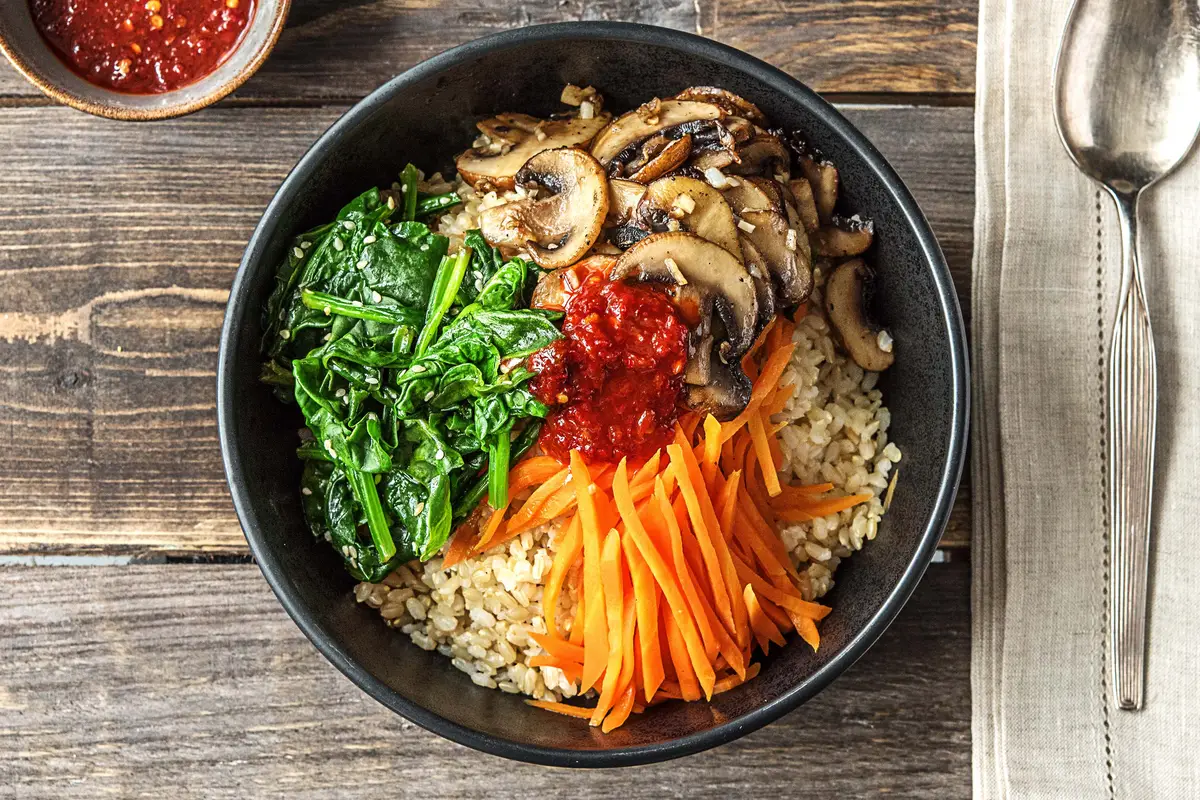
Bibimbap is a vibrant Korean dish that combines steamed rice, assorted sautéed and seasoned vegetables, and a flavorful sauce, often topped with a fried egg. This vegetarian version replaces eggs with tofu or tempeh for a plant-based twist while keeping the authentic flavors intact. Known for its harmonious mix of textures, colors, and tastes, Bibimbap is a balanced, nutritious, and visually appealing meal that has gained popularity worldwide for both its flavor and health benefits.
The origins of Bibimbap can be traced back to Korea, where it was traditionally served as a way to use leftover vegetables and rice. The name “Bibimbap” literally means “mixed rice,” reflecting the dish’s signature method of combining ingredients just before eating. Historically, it was consumed during festivals and special occasions, offering families a convenient and colorful way to enjoy a variety of seasonal vegetables. Over time, Bibimbap evolved into a staple of Korean cuisine, with regional variations introducing local vegetables, sauces, and proteins. Today, Bibimbap is enjoyed in Korean households, street food stalls, and restaurants around the world, appreciated for its balance of flavors, textures, and nutrition.
One of the defining features of Bibimbap is the careful preparation of each component. Vegetables such as carrots, spinach, zucchini, mushrooms, and bean sprouts are typically sautéed or blanched separately, then seasoned individually to enhance their natural flavors. Rice forms the base, providing a soft and neutral foundation that complements the seasoned vegetables and toppings. In this vegetarian version, tofu or tempeh can be lightly marinated and pan-fried to add protein and a satisfying texture. The dish is then topped with a spicy, sweet, and savory sauce, such as gochujang-based dressing, which ties all the ingredients together.
When served, all components are mixed thoroughly to allow the flavors to meld, creating a harmonious and delicious bite every time. Bibimbap is not only visually appealing and flavorful but also offers several health benefits. The variety of vegetables provides a wide range of vitamins, minerals, and antioxidants that support overall wellness. Spinach and carrots offer vitamin A and iron, supporting eye health and blood function. Mushrooms contribute B vitamins and minerals like selenium, which aid in immunity and cellular health.
Tofu or tempeh adds plant-based protein, calcium, and magnesium for muscle maintenance and bone strength. Brown or whole-grain rice adds fiber and complex carbohydrates for sustained energy, while the sauce, made with fermented ingredients like gochujang, can provide probiotics that support gut health. Together, these components make Bibimbap a nutrient-dense, balanced, and satisfying meal.
Bibimbap Ingredients
Serves: 2–3 people
- Steamed rice – 2 cups (white or brown)
- Carrot – 1 medium (julienned)
- Spinach – 1 cup (blanched)
- Zucchini – 1 small (julienned)
- Mushrooms – ½ cup (sliced)
- Bean sprouts – ½ cup (blanched)
- Firm tofu – ½ block (cubed)
- Soy sauce – 2 tbsp (for tofu marinade)
- Sesame oil – 1 tbsp
- Gochujang or spicy chili paste – 2 tbsp
- Garlic – 1 clove (minced)
- Salt – ½ tsp
- Black sesame seeds – 1 tsp (for garnish)
- Green onions – 1 tbsp (chopped, for garnish)
Steps
- Press and cube the tofu, then marinate it in 2 tablespoons of soy sauce and a pinch of minced garlic for 10–15 minutes.
- Sauté the marinated tofu in a lightly oiled pan over medium heat until golden and slightly crispy. Remove and set aside.
- Prepare the vegetables individually: sauté carrots, zucchini, and mushrooms in a small amount of sesame oil and salt, blanch spinach and bean sprouts, and season each lightly.
- Place steamed rice in a large bowl as the base.
- Arrange the prepared vegetables and tofu neatly on top of the rice, creating sections for each ingredient.
- Drizzle sesame oil and gochujang over the arranged vegetables and tofu.
- Sprinkle black sesame seeds and chopped green onions over the top.
- Just before eating, mix all ingredients thoroughly to combine the flavors. Serve immediately.
Health Benefits
Vegetarian Bibimbap is a wholesome and balanced dish packed with nutrients. The assortment of vegetables provides fiber, vitamins, and antioxidants that support digestion, immunity, and cellular health. Tofu adds plant-based protein, calcium, and iron, promoting muscle function and bone strength. Whole-grain rice contributes complex carbohydrates and fiber for steady energy release. Fermented chili paste introduces probiotics that enhance gut health, while sesame oil provides heart-healthy fats and anti-inflammatory compounds. Altogether, Bibimbap delivers a combination of taste, texture, and nutrition in a single bowl, making it a satisfying and health-conscious meal option.
Kitchen Tip: For a traditional touch and extra flavor, lightly fry a small amount of kimchi and add it to the Bibimbap before mixing to give the dish a tangy, umami boost.