
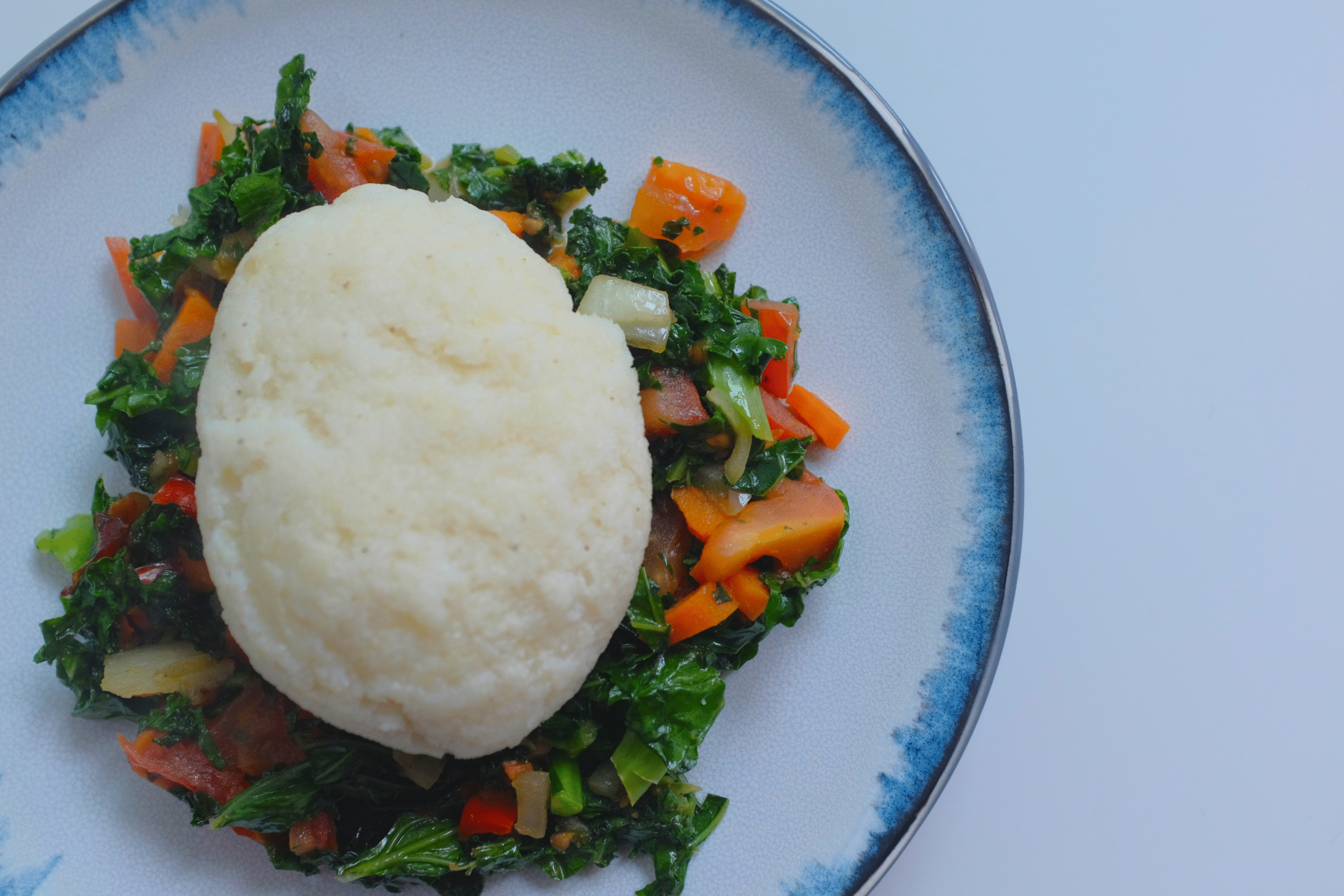
Ugali and Sukuma Wiki is a staple dish across East Africa, particularly in Kenya and Tanzania, featuring a creamy, firm maize flour porridge served alongside sautéed leafy greens. This wholesome combination has been a cornerstone of African cuisine for generations, celebrated for its simplicity, affordability, and nutritional value. Ugali provides a satisfying, energy-rich base, while Sukuma Wiki – typically collard greens or kale – adds flavor, fiber, and essential vitamins, creating a balanced and hearty meal.
The origins of Ugali trace back to Africa, where maize (corn) became a dietary staple following its introduction from the Americas. Ugali, known in different regions as Sadza, Posho, or Nsima, is a versatile dish made by stirring maize flour into boiling water until it forms a firm, dough-like consistency. Sukuma Wiki, meaning “push the week” in Swahili, refers to affordable, readily available greens that help families extend meals economically. The combination of Ugali and Sukuma Wiki became a staple across households, schools, and communal gatherings, admired for its ease of preparation and the way it satisfies hunger while providing nourishment.
This dish is beloved for its comforting textures and flavors. Ugali is dense and firm, perfect for scooping up greens or accompanying stews and sauces. Sukuma Wiki is lightly sautéed with onions, garlic, tomatoes, and a hint of oil, offering a savory and slightly tangy taste that complements the neutral flavor of Ugali. The dish is often enjoyed with beans, lentils, or spicy vegetable stews to enhance protein content. Its adaptability and ability to incorporate locally available ingredients make it a cultural and culinary favorite across East Africa.
Nutritionally, Ugali and Sukuma Wiki provide essential macronutrients and micronutrients. Maize flour supplies complex carbohydrates for sustained energy, while the greens contribute fiber, vitamins A, C, and K, and minerals such as calcium and iron. Onions, garlic, and tomatoes add antioxidants and phytonutrients that support overall health. Using a small amount of healthy oil for sautéing preserves nutrient absorption and adds a touch of flavor. This combination creates a balanced meal that fuels the body, promotes digestion, and strengthens the immune system, making it ideal for daily consumption.
Ugali and Sukuma Wiki Ingredients
Serves: 4 people
For Ugali:
- Maize flour (cornmeal) – 2 cups
- Water – 4 cups
- Salt – ½ tsp (optional)
For Sukuma Wiki:
- Collard greens or kale – 4 cups (chopped)
- Onion – 1 medium (sliced)
- Garlic – 2 cloves (minced)
- Tomato – 1 large (chopped)
- Vegetable oil – 1–2 tbsp
- Salt – ½ tsp
- Black pepper – ¼ tsp
- Lemon juice – 1 tsp (optional, for flavor)
Steps
- In a medium pot, bring 4 cups of water to a boil. Add a pinch of salt if desired.
- Gradually pour in maize flour, stirring continuously with a wooden spoon or spatula to prevent lumps.
- Reduce heat to low and continue stirring until the mixture thickens and pulls away from the sides of the pot, forming a firm, dough-like consistency (approximately 10–15 minutes). Remove from heat and cover to keep warm.
- In a separate skillet, heat vegetable oil over medium heat. Sauté onions and garlic until fragrant and translucent.
- Add chopped tomatoes and cook until soft, releasing juices.
- Stir in chopped greens and season with salt and black pepper. Sauté for 5–7 minutes until the greens are tender but still vibrant.
- Drizzle lemon juice over the greens, if using, and mix well.
- Serve Ugali in portions on a plate, accompanied by a generous serving of Sukuma Wiki on the side. Scoop and eat together using hands or utensils as preferred.
Health Benefits
Ugali and Sukuma Wiki offer a wholesome, balanced meal rich in complex carbohydrates, fiber, vitamins, and minerals. The maize flour in Ugali provides energy and supports digestive health, while the greens in Sukuma Wiki supply antioxidants, vitamins A, C, and K, and iron to support immunity, vision, and bone health. Garlic and onions provide natural compounds that aid heart health and digestion, while a touch of healthy oil enhances nutrient absorption. This combination of simple, minimally processed ingredients makes the dish a nutritious, satisfying option for everyday meals.
Kitchen Tip: For a creamier texture, stir in a small amount of coconut milk into Ugali before it sets, enhancing flavor and richness while keeping the dish vegan and wholesome.